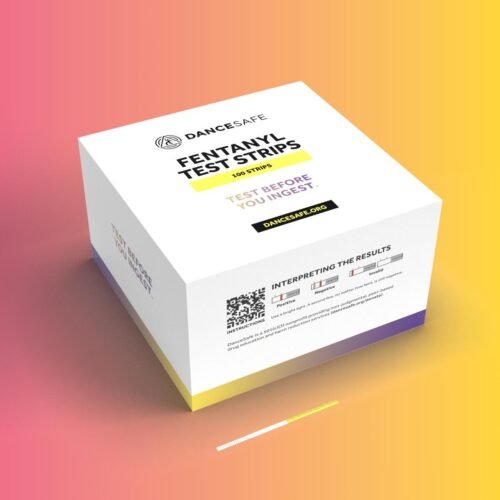
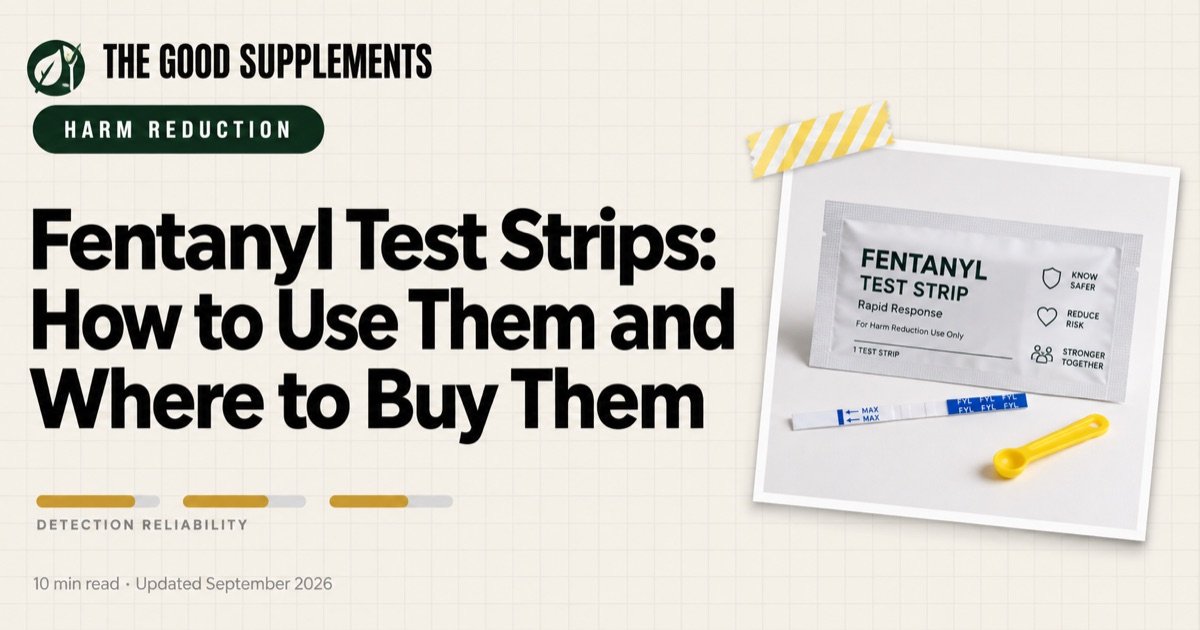
What a fentanyl test strip actually is
A fentanyl test strip is a small paper strip coated with antibodies that react to fentanyl and most of its chemical analogs. Originally designed as a urine drug-screening tool, harm reduction organizations adapted the same immunoassay technology for direct drug checking around 2017, as fentanyl contamination began showing up across the US drug supply, not just in opioids.
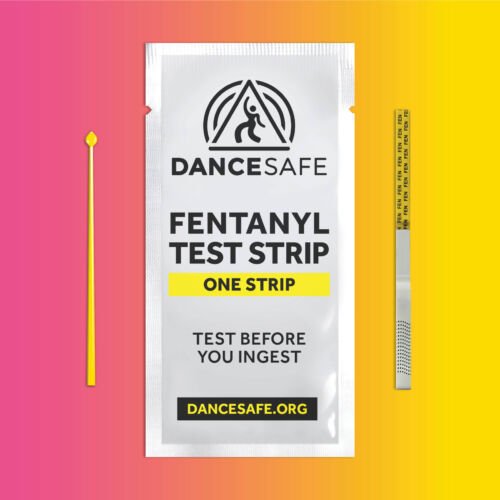
The mechanism is straightforward: dissolve a small sample of the substance in water, dip the strip, and read the result after about two to five minutes. One line means fentanyl or an analog was detected. Two lines means none was detected at a level the strip can pick up. DanceSafe, the nonprofit that manufactures the strips referenced throughout this guide, has sold this exact format since the technology was first adapted for drug checking.
How to actually use one correctly
Most false negatives trace back to user error rather than the strip itself. The full sequence matters. Skipping a step is where things go wrong.
Dissolve a small amount of the substance, roughly the size of a match head for powders, in about a teaspoon (5ml) of clean water. For a pill, scrape a small amount from multiple spots. Not just one corner. Fentanyl contamination is frequently unevenly distributed, called "hot spotting," within a single pill or batch.
Dip the strip about half an inch into the water for 15 seconds. Then lay it flat on a clean, dry surface and wait the full two to five minutes stated on the packaging. Reading it too early is a common source of confusing or inconclusive results.
What a negative result actually means, and what it doesn't
This is the single most important thing to understand before relying on a test strip. It's also the most commonly misunderstood. A negative result means the specific portion tested didn't trigger a reaction to the strip's target analogs. Nothing more. The same discipline, checking a claim rather than trusting a label at face value, is exactly what to look for when vetting any vendor, harm-reduction supplier or otherwise.
Fentanyl contamination is often unevenly mixed into a supply. One area of a powder or one part of a pressed pill can test negative while another part contains a lethal dose. That's exactly why the sampling technique above, testing from multiple spots rather than one corner, matters as much as the strip itself.
A test strip can't tell you the concentration present, only whether it's above the detection threshold. It can't tell you whether some other, unrelated substance is there too. One question, answered well. Not every safety question a person might have.
Detection limits and known analogs
Fentanyl test strips use antibody technology tuned to detect fentanyl and the large majority of its known structural analogs, including carfentanil, acetylfentanyl, and furanylfentanyl among others. New analogs occasionally emerge that fall outside what existing antibody formulations reliably catch, which is part of why the strips get periodically reformulated by manufacturers.
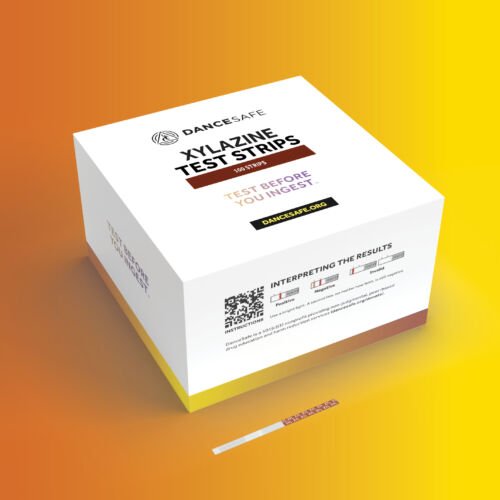
A separate, newer concern in the illicit drug supply is xylazine, a veterinary sedative increasingly found mixed into opioids, particularly fentanyl. Xylazine test strips, a distinct product using different antibody technology, were developed specifically for this and should be used alongside fentanyl testing, not as a replacement for it, since the two substances are frequently found together.
| Step | What to do | Common mistake |
|---|---|---|
| 1. Dissolve | Match-head-sized sample in 5ml (about a teaspoon) of water | Testing a dry powder or pill directly, without dissolving |
| 2. Sample from multiple spots | For pills, scrape from several locations, not just one corner | Testing only one spot on a pressed pill |
| 3. Dip | Strip end submerged about half an inch for 15 seconds | Dipping too deep, which can affect the reading |
| 4. Wait and read | 2 to 5 minutes, per the specific product's instructions | Reading the result too early |
Is it legal to buy and carry fentanyl test strips?
In most US states, yes. Following a wave of state-level drug paraphernalia law reforms roughly between 2021 and 2025, driven by the scale of the overdose crisis, the large majority of states now specifically exempt fentanyl test strips from paraphernalia laws. A handful of states have not passed this exemption and still technically classify them as paraphernalia, so checking current state-specific law before ordering or carrying strips is worth the five minutes it takes.
This legal landscape has shifted quickly and keeps shifting, so a definitive answer for any specific state is best confirmed directly rather than assumed from general information.
Where to actually buy them
DanceSafe, a US harm-reduction nonprofit operating since 1999, manufactures its own fentanyl test strips domestically and sells them directly through its shop in several pack sizes, from a single strip up to boxes of 2,000, alongside a dedicated xylazine test strip and reagent-based drug-checking kits for identifying other substances entirely. It positions itself as the only nonprofit manufacturer of reagent drug-checking kits in the US, distinct from the for-profit test kit resellers that also operate in this space. Our full DanceSafe review breaks down its full product range, pricing and what we could independently verify.
Some local health departments, syringe service programs, and harm-reduction organizations distribute test strips for free, particularly in states where public health funding has been directed toward overdose prevention. Checking with a local public health department before purchasing is worth doing, since free options exist in many areas.
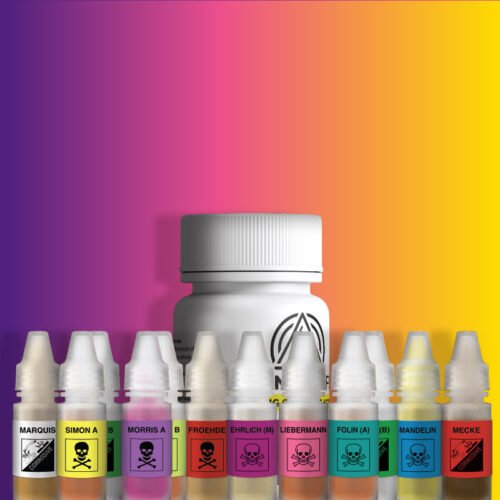
Test strips vs reagent kits: different questions, different tools
It's easy to conflate these, and they answer genuinely different questions. A fentanyl test strip answers one narrow question: is fentanyl or a known analog present, yes or no. A reagent kit works differently, using chemical color-change reactions to help identify what a substance actually is, or rule out what it isn't, across a wider range of drugs including MDMA, cocaine, and ketamine.
The two are complementary rather than interchangeable. A reagent kit might suggest a powder is consistent with MDMA, while a fentanyl strip separately confirms whether that same sample also contains fentanyl. Neither alone gives a complete picture, and DanceSafe sells both, including a nine-reagent complete set and a smaller six-reagent standard set for the most commonly checked substances.
What the strips can't do
A test strip cannot make any substance safe. It reduces one specific, serious risk, undisclosed fentanyl contamination, without addressing dosing, purity of the intended substance, or any other adulterant that isn't fentanyl or one of its close analogs. Never using drugs alone, keeping naloxone on hand, and starting with a smaller amount than usual are separate, complementary precautions that a test strip doesn't replace.
This guide describes how the tools work and how to use them correctly. It is not encouragement to use any illicit substance, and the safest choice regarding any illegal drug is not to use it at all. The site's full evidence-graded guide library covers the same checkable-claim standard for every supplement and compound it reviews.