"Immune support" is a marketing category, not a mechanism
"Immune support" is one of the vaguest phrases on a supplement label. Almost any nutrient involved in normal cell function can be framed as supporting immunity in some general sense.
That framing makes it easy to bundle ingredients with wildly different evidence quality into one product and one marketing claim. This guide ranks the four most common immune-marketed ingredients by what their actual trial evidence supports, not by how prominently they're marketed.
1. Vitamin D: the strongest evidence, with a big caveat
Vitamin D plays a genuine, well-documented role in immune cell function, and the strongest evidence in this category comes from correcting vitamin D deficiency specifically. A large meta-analysis published in the BMJ pooling individual patient data from 25 randomized trials found that vitamin D supplementation reduced acute respiratory infection risk, with the protective effect concentrated most clearly among people who were deficient to begin with.
The caveat matters: this is a deficiency-correction story, not evidence that piling on extra vitamin D above what your body needs provides additional immune benefit. The full dosing breakdown is covered in the vitamin D3 dosage guide, but the short version for immune purposes is the same 1,000 to 2,000 IU/day general range, or a doctor-guided correction dose if you're tested as deficient.
2. Zinc: shortens colds, doesn't prevent them
Zinc has a genuinely different evidence profile than most immune ingredients: it's not well supported for *preventing* colds, but there's reasonably consistent trial evidence that zinc lozenges, taken within 24 hours of symptom onset, can modestly shorten a cold's duration, by roughly one day in several trial analyses.
The form and timing both matter. Zinc acetate or zinc gluconate lozenges (not capsules swallowed whole) appear to work by direct contact with the throat tissue, and starting late in a cold's course reduces the benefit significantly. This is a narrow, specific use case, not a general year-round immune supplement in the way it's often marketed.

3. Vitamin C: the most marketed, least supported for healthy adults
Vitamin C is the ingredient most associated with immune support in the public imagination, largely from decades of marketing rather than trial strength. A large Cochrane systematic review found that regular vitamin C supplementation does not reduce cold incidence in the general population, though it modestly shortened cold duration in the pooled trials.
The one population where vitamin C showed a more meaningful preventive effect: people under significant physical stress, like marathon runners or soldiers in subarctic conditions. Not typical daily life.
For most healthy adults with an adequate diet, additional vitamin C beyond what food already provides adds little on top of the modest duration effect. It's cheap and low-risk, which is likely why it remains the most common immune ingredient despite the thin general-population evidence.
4. Elderberry: promising but thin
Elderberry extract has some supporting evidence for reducing cold and flu symptom duration. The evidence base is considerably smaller and lower-quality than for vitamin D or zinc, often small trial sizes with industry funding.
Reasonable to try. It shouldn't be marketed with the same confidence as the better-supported options on this list, and the popularity of elderberry gummies and syrups has outrun what the trials actually demonstrate.
| Ingredient | Evidence strength | What it actually does |
|---|---|---|
| Vitamin D | Moderate to strong (in deficient people) | Reduces respiratory infection risk when correcting a real deficiency |
| Zinc lozenges | Moderate | Shortens cold duration by about a day, doesn't prevent colds |
| Vitamin C | Weak for general population | Minimal preventive effect, modest duration reduction |
| Elderberry | Weak, small trial base | Possible symptom duration benefit, needs more research |
A simple way to prioritize this list
Test vitamin D if you haven't. Keep zinc lozenges on hand for the first day of a cold. Treat vitamin C, elderberry and echinacea as low-cost, low-risk additions rather than the core of an immune strategy.
Why supplement marketing loves the word "immune"
"Immune support" survives as a marketing phrase partly because it's genuinely hard to disprove. Unlike a claim about curing a specific illness, a vague structure/function claim about supporting a broad bodily system rarely triggers the same regulatory scrutiny.
That regulatory looseness is exactly why this guide ranks ingredients by their own individual trial evidence rather than accepting the category-wide framing at face value.
What about echinacea and other herbal immune boosters?
Echinacea is one of the oldest and most widely used herbal cold remedies in the US, and the trial evidence for it is genuinely mixed. Some meta-analyses find a modest reduction in cold risk and duration; others find no significant effect, likely reflecting real differences in the echinacea species and extract preparations used across studies, which aren't standardized the way a pharmaceutical dose would be.
That inconsistency is itself informative: it means results depend heavily on which specific product and preparation you buy, an unusual amount of variability compared to something like vitamin D or zinc, where the dosing at least is more consistent across studies.
What about probiotics?
Probiotics get marketed heavily under the immune umbrella too, since a large share of immune tissue sits in the gut. The evidence is genuinely strain-specific rather than a blanket "probiotics help immunity" claim.
Certain studied strains, particularly *Lactobacillus rhamnosus GG* and specific *Bifidobacterium* strains, show modest reductions in respiratory infection duration in some trials, mostly in children. Generic, unspecified probiotic blends without a named, studied strain don't carry the same evidence, which makes this a label-reading exercise similar to the certification marks covered in how to read a supplement label.
What about colostrum?
Bovine colostrum, the nutrient-dense milk cows produce in the first days after calving, has become a popular immune-support supplement in its own right, marketed on its antibody and immunoglobulin content. The human trial evidence is genuinely more encouraging here than for vitamin C or elderberry, with several small studies showing reduced upper respiratory infection frequency in athletes and children specifically.
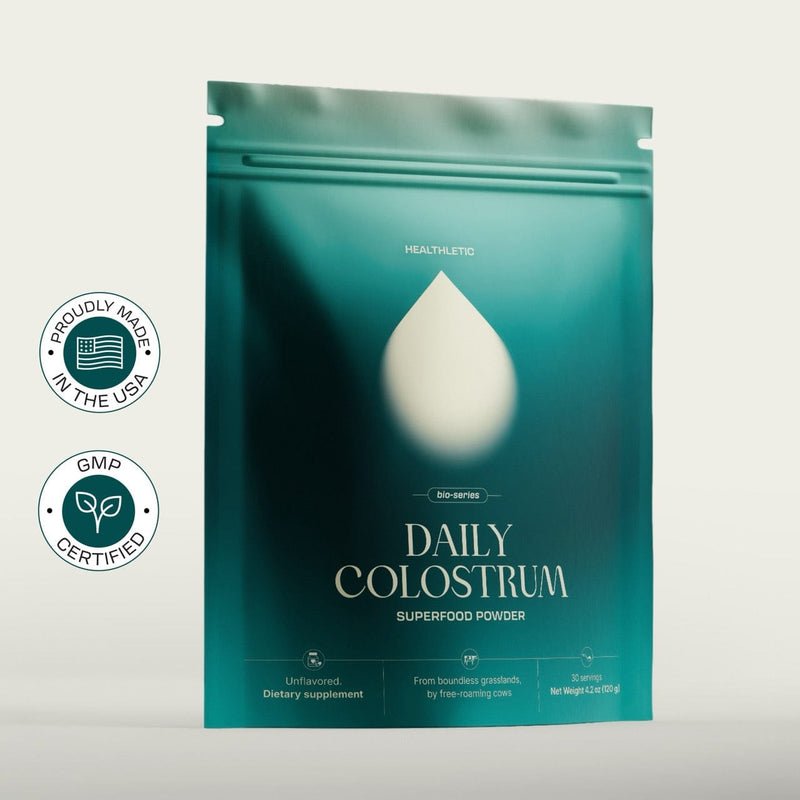
Healthletic's Daily Colostrum, grass-fed and third-party tested per the vendor, is one example of a finished colostrum product if you want to try this category. As with everything on this list, it's an addition to the stronger levers below, not a replacement for them.
What actually matters more than any supplement here
It's worth saying plainly: sleep, stress management and diet move immune function more than any pill on this list, and the research on all three is considerably stronger than for most immune supplements. Chronic sleep deprivation measurably suppresses immune markers in controlled studies, in ways no supplement reliably reverses.
Regular moderate exercise is associated with better immune outcomes than either a sedentary lifestyle or extreme overtraining, following a U-shaped curve rather than a simple more-is-better relationship. And a generally varied diet with adequate protein and micronutrients does more for baseline immune function than isolating any single nutrient into a supplement.
None of this is a reason to skip the supplements covered above where the evidence supports them, particularly correcting an actual vitamin D deficiency. It's a reason to treat supplements as the smaller lever, not the main one.

What's actually worth buying
If you're choosing one thing, vitamin D has the strongest case, and it's genuinely worth testing your levels if you haven't. Zinc lozenges are worth keeping on hand specifically for the first 24 hours of a cold, not as a daily supplement. Vitamin C and elderberry are low-risk and reasonable to include in a routine, but shouldn't be expected to do the heavy lifting the marketing around them implies.