Why these two always get mentioned together
Search either name and the other shows up within a couple of results. Part of that is marketing: vendors sell them as a pair, and pre-mixed blends put both in one vial. Part of it is that the claims overlap. Both get described in terms of tissue repair, both get discussed around soft-tissue injury, and both circulate in the same corners of the internet.
The overlap in claims is not matched by an overlap in evidence, though. That is the part almost nobody spells out, and it is the reason this comparison exists.
What BPC-157 actually has behind it
BPC-157 is a synthetic 15-amino-acid peptide whose sequence corresponds to a fragment of a protein found in gastric juice. It is unusually stable for a peptide of that length, which is why it turns up in so many preclinical papers: it survives experimental conditions that would degrade most comparable molecules.
The literature is genuinely large by research-chemical standards, running to hundreds of published papers on angiogenic signaling, growth factor receptor expression, and tissue-repair models. The catch is what kind of papers they are. The overwhelming majority are rodent studies. Published human trial data is close to nonexistent, and the handful of human studies that exist looked at gastrointestinal conditions using oral formulations, not the injectable use that dominates online discussion.
So the honest summary: a lot of mechanistic and animal work, a plausible story about how it might act, and almost nothing in humans.
What TB-500 has behind it
TB-500 is a synthetic fragment of thymosin beta-4, a naturally occurring protein involved in cell migration and actin regulation. Thymosin beta-4 itself, the full protein, has been studied in humans, including in trials for dry eye and for wound healing. That is worth knowing because it gets used as a rhetorical shortcut.
TB-500 is not thymosin beta-4. It is a shorter fragment, and evidence for the full protein does not transfer automatically to the fragment. When you see a vendor page cite thymosin beta-4 clinical trials on a TB-500 product listing, that is the substitution happening in real time.
On TB-500 specifically, the published work is thinner than BPC-157's and skews heavily toward animal models. There is no human trial establishing an effective dose or a safety profile for the fragment as sold.
Cost, which is where the difference is most concrete
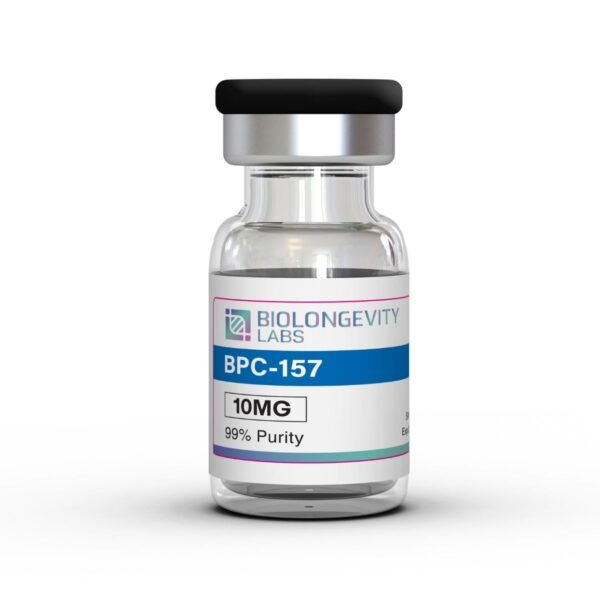
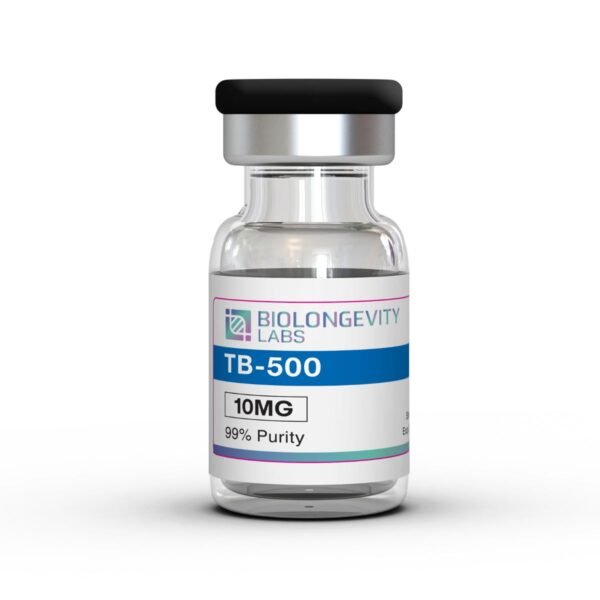
Evidence aside, the price gap is easy to verify. At BioLongevity Labs, one of the two brands we review, a 10mg vial of BPC-157 lists at $99.97 while a 10mg vial of TB-500 lists at $164.97. That is about 65% more for the compound with less supporting research.
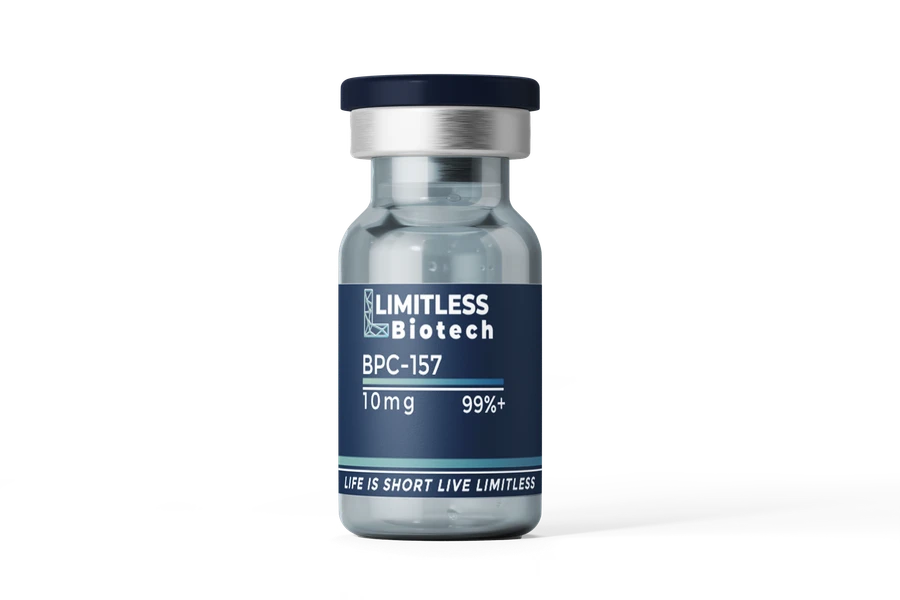
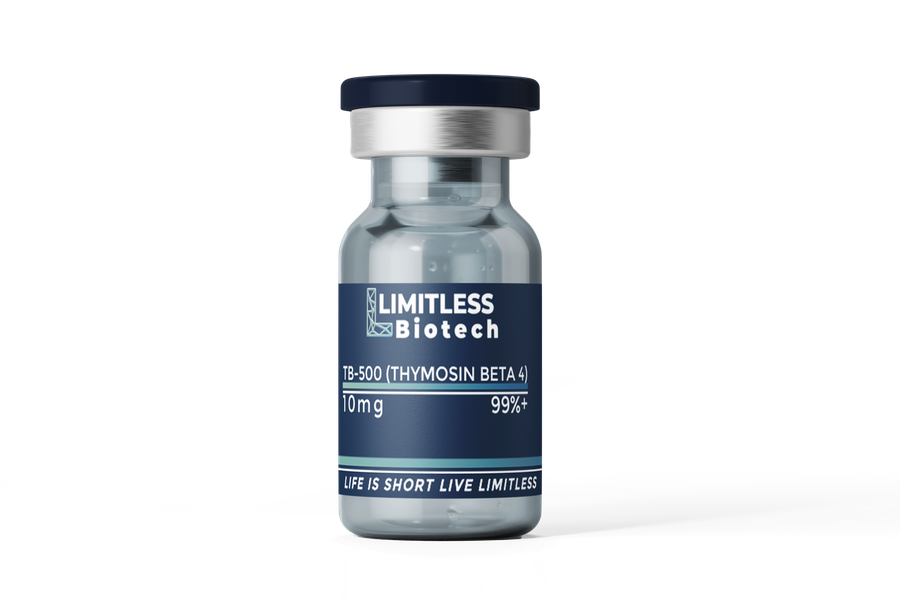
At Limitless Biotech, the other brand we track, neither price is visible without registering an account, so a like-for-like comparison there requires a login first. That difference in pricing transparency is one of the main things separating the two vendors, and we cover it in both brand reviews.
The blend question
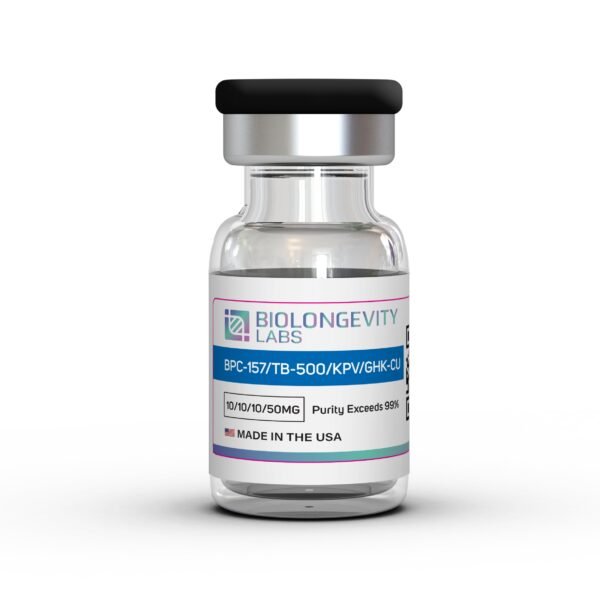
Because the two get discussed as a pair, blends are everywhere. BioLongevity sells a BPC-157 and TB-500 blend at 10mg, plus larger multi-compound vials like GLOW, which adds GHK-Cu, and KLOW, which adds KPV on top of that.
Blends have one analytical drawback worth understanding before you buy. A purity figure on a blended vial describes the mixture. It does not tell you the purity of each compound measured separately, and it does not tell you the exact ratio surviving in the vial. If per-compound documentation matters to you, single vials are the cleaner option, even though they cost more in total.
What neither of them is
Neither compound has an approved consumer product in the United States or anywhere else. BPC-157 specifically appears on the FDA's list of bulk drug substances withdrawn from consideration for compounding. Both are sold under research-use-only terms, which every reputable vendor in this category states plainly and which buyers attest to at checkout.
That framing is not a technicality that everyone quietly ignores. At BioLongevity Labs the research-use attestation includes IP verification and an annual research-submission requirement to keep an account active. Read the policy before ordering rather than after.