
Why these photos travel so well
A before and after image does something a study can't: it shows you a person rather than a number. That's why it persuades, and why every corner of this market leans on it.
It's also the weakest evidence in the hierarchy. Not through dishonesty, since most people posting are sincere, but because a photo pair can't separate the compound from everything else that changed.
What moves between two photos that is not the compound
Before you read another one, this is the list worth holding in mind:
- Training and diet. Almost nobody starts a compound and changes nothing else. The decision to buy is usually part of a broader push.
- Water and glycogen. Visible definition shifts noticeably day to day on hydration and carbohydrate intake alone.
- Lighting and angle. Overhead light creates definition that flat light does not. The after photo is usually the more flattering setup, often unconsciously.
- Time of day. Morning and evening photos of the same person differ meaningfully.
- Posture and tension. Standing relaxed versus braced changes the outline more than several weeks of most interventions.
- Time itself. Eight weeks of consistent training produces visible change with no compound involved at all.
The filter you cannot see
The deeper problem is selection. Nobody who ran a compound for eight weeks and saw nothing photographs it, crops it and posts it. Null results exist in far greater numbers, and they're invisible.
So what reaches you is a collection of the cases where something appeared to happen, which looks like a pattern and is actually a filter. This is the same reason testimonial-heavy marketing works on products that do nothing.
What they are actually good for
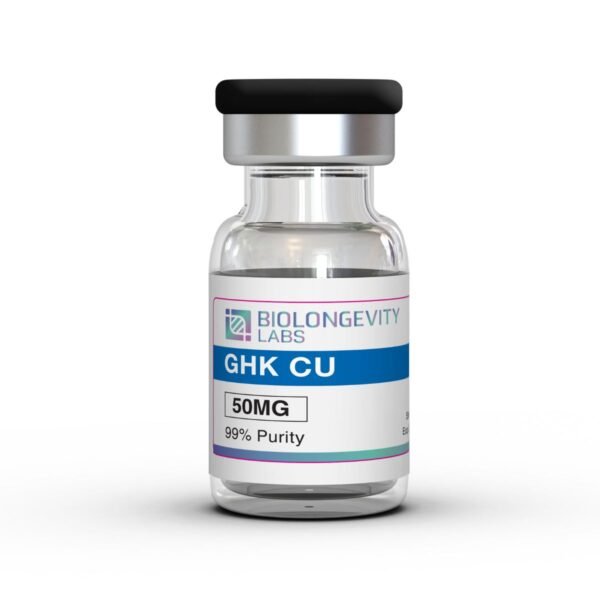
BioLongevity Labs
GHK-Cu Copper Peptide (50mg)
One genuine use, and it is worth separating from the efficacy question.
Visible, localised, surface-level changes photograph honestly. Skin texture and wound healing are the clearest cases. A healing injury or a patch of skin photographed under consistent conditions is showing you something real, because the change is at the surface and the comparison is local rather than whole-body.
This is why GHK-Cu has the most credible photo evidence of anything in the category. It is also the compound with the most genuine published topical work, which is not a coincidence.
Systemic claims are the opposite case. Fat loss, muscle gain, energy and longevity cannot be read off a photo pair in any useful way.
How to judge one if you are going to look
If you are going to use these at all, these are the questions that separate a useful photo pair from a useless one.
| Ask | Why it matters |
|---|---|
| Same lighting, angle, distance and time of day? | Most apparent change in whole-body photos comes from these |
| Is the change localised and surface-level? | Skin and wound healing photograph honestly, body composition does not |
| What else changed in the period? | Training, diet and sleep almost always changed too |
| How long between the two? | Eight weeks of consistency shows visible change with no compound at all |
| Who is posting it, and do they sell it? | A vendor's gallery is marketing, not evidence |
Reading a before and after honestly
What to look at instead
If the question behind the photo search is whether a compound does anything, the better sources are the published work and the honest gaps in it. Our guides grade each compound on what human trials actually cover, and are peptides safe sets out how thin that evidence is for most of the catalogue.
And if you are going to buy regardless, the thing you can genuinely verify is not the result, it is the vial. Our vendor vetting guide covers what a certificate should show. Everything we reference is sold for research use, and nothing here is medical advice.