The practitioner-brand reputation, and where it actually comes from
Thorne built its reputation substantially through a professional sales channel: for years, many Thorne products were available primarily through healthcare providers rather than direct retail, which created a distribution pattern where doctors, chiropractors, and naturopaths recommended the brand because it was the one they had direct access to and trusted.
That channel strategy is now less exclusive. Thorne sells broadly online today, but the practitioner association stuck.
This matters for interpreting the "practitioners recommend Thorne" claim correctly: part of it reflects genuine manufacturing and testing rigor (covered below), and part of it reflects a historical distribution advantage that predates a lot of today's online-direct competitors.
Both things can be true at once. The reputation isn't purely manufactured, and it isn't purely a function of superior ingredients compared to every other quality brand either.
NSF Certified for Sport: the most concrete, checkable claim
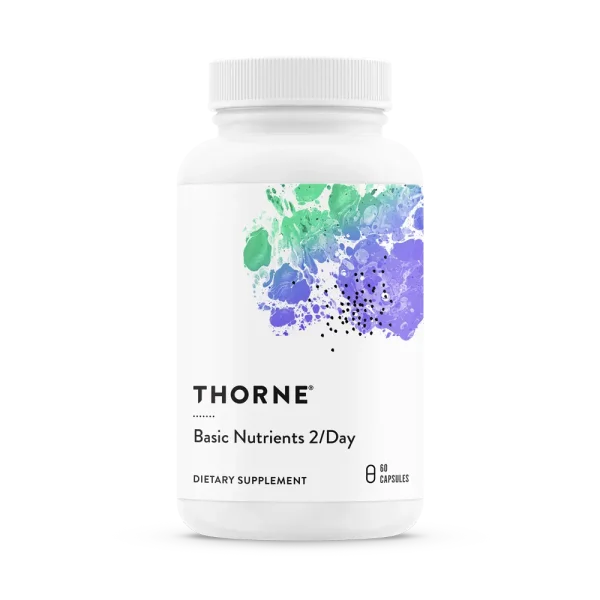
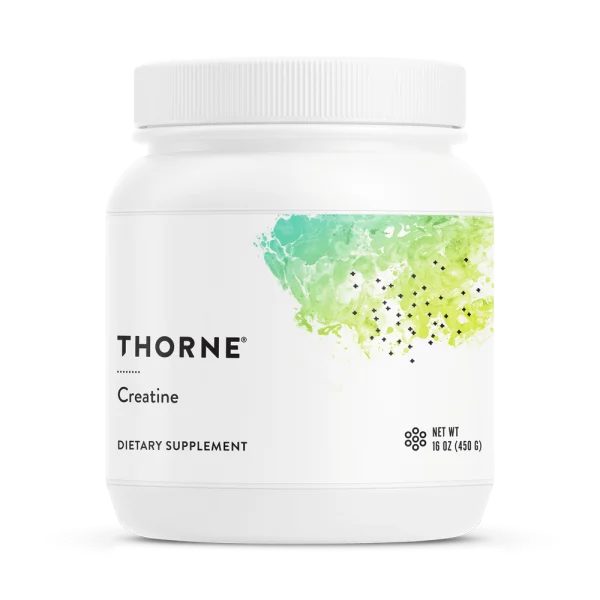
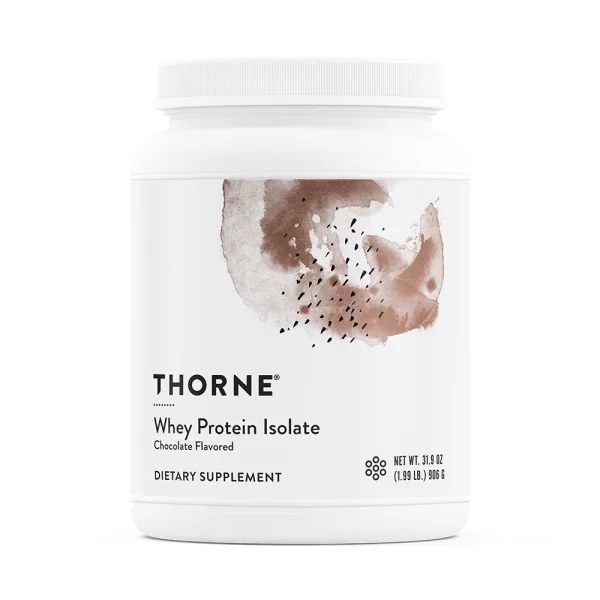
Thorne has one of the broadest NSF Certified for Sport product lines of any supplement brand, including its flagship Basic Nutrients 2/Day, its Creatine, and its Whey Protein Isolate.
NSF Certified for Sport testing checks every batch against label claims and screens for more than 200 substances banned by major athletic organizations, a standard Thorne has applied across more of its catalog than most competing brands bother with.
This certification is the single most verifiable, non-marketing basis for the brand's quality reputation. It's independently audited, publicly listed on NSF's own certified-product database, and directly relevant to professional athletes, military personnel, and anyone in a drug-tested occupation who needs assurance against supplement-related contamination.
What the price premium actually buys
Basic Nutrients 2/Day runs roughly $38 to $40 for a 30-day supply (60 capsules, two per day), compared to $10 to $15 for a typical mass-market multivitamin like a store-brand or Centrum-tier product. That's roughly double to triple the per-day cost.
What that premium buys is fully disclosed individual doses rather than blended amounts, more bioavailable forms of certain nutrients (methylated B vitamins rather than cheaper synthetic forms, for instance), NSF Certified for Sport batch testing, and the absence of unnecessary fillers, dyes, and additives that some mass-market products include for shelf stability or appearance, not a fundamentally different set of nutrients.
Whether that's worth the premium depends on what you value.
For someone with no absorption issues and no need for sport-specific contaminant testing, a well-formulated, disclosed-dose mass-market multivitamin can deliver comparable nutritional value at a fraction of the price.
For someone who's had trouble absorbing synthetic folic acid or B12 forms, or who specifically needs the NSF certification, Thorne's formulation choices have a clearer practical justification.
Thorne's creatine: does it differ from cheaper options?
Thorne's Creatine is creatine monohydrate, the same compound with decades of research behind it at the standard 3 to 5 gram daily dose, that's sold by dozens of brands at a fraction of the price.
The research supporting creatine monohydrate's effectiveness for strength, power output, and muscle mass doesn't distinguish between brands. It's the compound and dose that matter, not the manufacturer, as long as the product actually contains what the label states.
What Thorne's version adds is the NSF Certified for Sport testing, relevant specifically for tested athletes who need assurance the product is free of contaminants and banned substances, and a manufacturing process with fewer quality-control variables than some bargain-tier creatine brands.
For a non-tested recreational lifter, a cheaper, reputable creatine monohydrate product delivers essentially the same physiological outcome at a lower price.
| Product category | Thorne price (approx.) | Mass-market equivalent | Key difference |
|---|---|---|---|
| Multivitamin (30-day) | $38 to $40 | $10 to $15 | Disclosed doses, bioavailable forms, NSF certified |
| Creatine monohydrate (90 servings) | $35 to $40 | $15 to $25 | NSF Certified for Sport, same active compound |
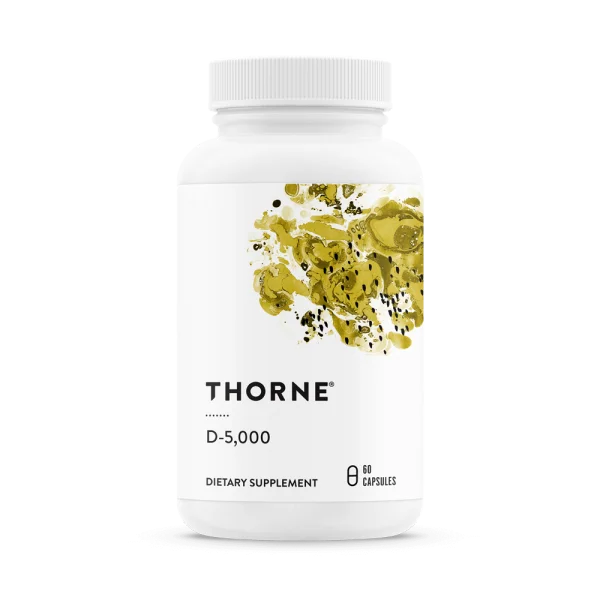
| Vitamin D (5,000 IU) | $15 to $20 | $5 to $10 | NSF Certified for Sport batch testing |
| Whey protein isolate | $50 to $60 | $30 to $45 | Lower allergen profile, NSF certified |
Thorne versus other practitioner-channel brands
Thorne competes most directly against brands like Pure Encapsulations and Life Extension in the practitioner-adjacent space. All three generally share the same baseline commitments: disclosed ingredient doses, minimal fillers, and third-party testing, though the specific certifications and exact testing bodies differ by product line.
The practical differences tend to come down to specific formulation choices, like which form of a nutrient a brand defaults to, and NSF Certified for Sport coverage breadth, where Thorne's catalog has one of the widest certified product ranges among the three.
For most buyers, the choice between these three brands comes down more to specific product formulation preferences than one being categorically superior across the board.
Is the research backing specific products real?
For Basic Nutrients 2/Day, the formulation reflects well-established nutritional science on bioavailable nutrient forms (methylated folate and B12, for instance, which bypass a genetic conversion step some people have trouble with) rather than a novel proprietary discovery unique to Thorne.
The underlying research on those specific nutrient forms is real. It's published independently of Thorne, in the broader nutritional science literature.
For creatine, the research base is among the deepest and most consistent in all of sports nutrition, again not specific to Thorne's formulation but to creatine monohydrate as a compound. Thorne's contribution here is manufacturing and testing rigor, not a unique active ingredient advantage.
Finding Thorne at a lower price
Thorne sells directly through its own site and through retail and practitioner-dispensing platforms, and pricing is fairly consistent across channels since Thorne enforces minimum advertised pricing more strictly than some supplement brands.
The most reliable ways to reduce cost are a Thorne account-based loyalty discount for repeat subscription orders, periodic sitewide sales directly through thorne.com, and buying larger package sizes (like the 120-count Basic Nutrients 2/Day versus the 60-count) where the per-day cost drops modestly.
Practitioner-dispensing platforms sometimes offer small additional discounts tied to a specific provider's dispensary account, but the saving is typically modest (around 5 to 10%) rather than a dramatic markdown.
The bottom line
Thorne's reputation is a genuine mix of earned manufacturing rigor and historical distribution advantage.
The NSF Certified for Sport coverage across its catalog is the most concrete, independently verifiable reason to choose it over a comparable mass-market brand, particularly for anyone in tested sport or simply wanting the highest practical assurance against contamination.
For nutrients and compounds with decades of independent research behind them, like creatine monohydrate or standard vitamin D, the active ingredient itself isn't unique to Thorne.
You're primarily paying for testing rigor, disclosed dosing, and bioavailable nutrient forms. A legitimate premium for some buyers, an unnecessary one for others who are well served by a cheaper, reputable mass-market alternative.