What you're actually paying for
AG1 (formerly Athletic Greens) markets itself as a single daily scoop replacing a multivitamin, a probiotic, and a greens powder. A one-time 30-serving purchase runs $99, about $3.33 per serving, while a subscription brings that down to $79 per month, roughly $2.63 per serving.
For comparison, the typical greens powder category prices between $1.50 and $2.00 per serving. That means AG1 carries a 30 to 100% premium over the broader category it's competing in.
That premium is the central question worth working through: is the "all-in-one" convenience and brand backing worth paying roughly double what a comparable greens powder costs, especially once you account for what's actually disclosed about what's inside.
That's the real question.
The 75-ingredient claim and why it's hard to verify
AG1's marketing leans heavily on a "75 ingredients" or "75 vitamins, minerals and whole-food sourced ingredients" framing. What the label doesn't disclose is the individual dose of most of those ingredients.
AG1 uses several proprietary blends, listing groups of ingredients together under a single combined weight rather than breaking out milligram amounts per ingredient, including within its probiotic blend, which is disclosed as containing 10 billion CFU total but not broken down by individual strain amount.
This matters because a long ingredient list sounds comprehensive, but a herb or nutrient present at a trace, clinically insignificant dose provides essentially no functional benefit. It doesn't matter whether it's listed on the label.
There's no way for a consumer, or an independent reviewer, to verify whether any specific ingredient inside AG1's blends is present at a dose matching what's been studied in research for that ingredient. The dose simply isn't published.
Proprietary blends are common across the greens powder and multivitamin category broadly, not unique to AG1, and the pattern is discussed in more depth in how to read a supplement label. It does mean the "75 ingredients" figure is doing more marketing work than nutritional work until individual doses are disclosed.
NSF Certified for Sport: the one claim that's fully verifiable
AG1 Next Gen is NSF Certified for Sport, meaning an independent body tests each batch for more than 280 substances banned by major athletic organizations, in addition to verifying label-claim accuracy and screening for contaminants.
This is a real, checkable certification rather than a self-reported marketing badge. It's genuinely valuable for anyone competing in a drug-tested sport who needs assurance against inadvertent doping from a contaminated supplement.
For someone with no testing requirement, the certification still signals a baseline of manufacturing quality control and contaminant screening that not every greens powder on the market can claim, which is a legitimate point in AG1's favor even separate from the proprietary-blend transparency issue.
What the same money buys separately
Breaking the "all-in-one" promise into its three component parts and pricing them individually tells a clearer story about where the premium is going. A quality multivitamin with fully disclosed doses, something like Thorne's Basic Nutrients 2/Day, runs around $40 for a 30-day supply.
A standalone, well-studied probiotic runs roughly $20 to $30 per month depending on strain count and CFU. A basic, disclosed-dose greens powder runs $1.50 to $2.00 per serving, or roughly $45 to $60 per month.
Add those together and you land somewhere in the $105 to $130 per month range for three separate, fully disclosed products. That's actually higher than AG1's bundled $79 subscription price in many combinations.
A genuinely fair point in AG1's favor on pure cost: paying for convenience and consolidation is a rational choice, and buying three separate products doesn't guarantee savings.
The more honest comparison is against a budget stack rather than a premium one: a basic multivitamin ($10 to $15/month), a basic probiotic ($15 to $20/month), and a cheaper greens powder ($45 to $60/month) totals roughly $70 to $95, landing close to AG1's price while letting you see every ingredient's exact dose rather than trusting a combined blend weight.
| Approach | Monthly cost (approx.) | Dose transparency |
|---|---|---|
| AG1 subscription | $79 | Proprietary blends, doses undisclosed |
| Premium stack (Thorne multi + quality probiotic + basic greens) | $105 to $130 | Fully disclosed per ingredient |
| Budget stack (basic multi + basic probiotic + basic greens) | $70 to $95 | Fully disclosed per ingredient |
| Basic multivitamin alone | $10 to $15 | Fully disclosed |
Does AG1 have real science behind it?
AG1 has funded or cited a handful of small studies examining markers like gut microbiome diversity or nutrient status in users of the product. The individual ingredients it contains, many of which do have their own research, like probiotics generally or vitamin D, are a different matter.
The independent, peer-reviewed research base specifically on AG1's exact formula is thin relative to the size and marketing reach of the brand.
This is a common pattern across the greens powder category broadly: individual ingredients often have real supporting research, but the specific proprietary combination and dose used in a commercial product is rarely the exact thing that's been studied.
AG1's NSF certification addresses safety and label-claim accuracy. Not health outcomes.
Who AG1 actually makes sense for
AG1 is a reasonable choice for someone who wants genuine simplicity, one scoop instead of remembering three separate products, values the NSF Certified for Sport credential specifically (competitive athletes, people in tested professions), and has already decided the convenience premium is worth it over assembling a comparable stack themselves.
It's a weaker choice for someone optimizing purely for cost per nutrient, anyone who wants to verify specific ingredient doses against published research before trusting a supplement, or anyone comfortable managing three separate, cheaper products instead of paying for consolidation.
AG1 Pro and other variants
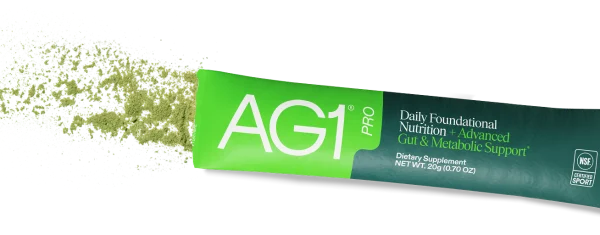
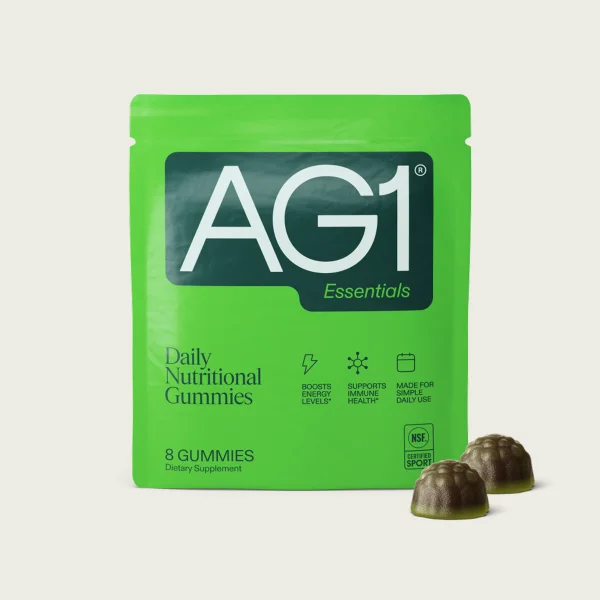
AG1 also sells AG1 Pro, formulated with a higher vitamin D dose aimed at pregnant and breastfeeding women under physician guidance, and AG1 Essentials Gummies, a lighter-dose gummy format for a more limited set of nutrients. Both carry the same proprietary-blend transparency limitations as the core powder.
Neither changes the core cost-per-nutrient calculus discussed above.
The bottom line
AG1 is a legitimately manufactured, NSF Certified for Sport product with a long and genuinely diverse ingredient list rather than a scam. The honest critique is narrower than that.
You're paying a significant premium for convenience and brand trust, without the ability to verify individual ingredient doses the way you could with a disclosed-dose multivitamin, probiotic, and greens powder bought separately.
If cost per nutrient and dose transparency matter more to you than consolidation and convenience, a budget three-product stack gets you comparable or better total cost with full disclosure. If one scoop replacing three decisions is worth paying for, AG1's price is at least in the same range as assembling a premium version of the same stack yourself.