
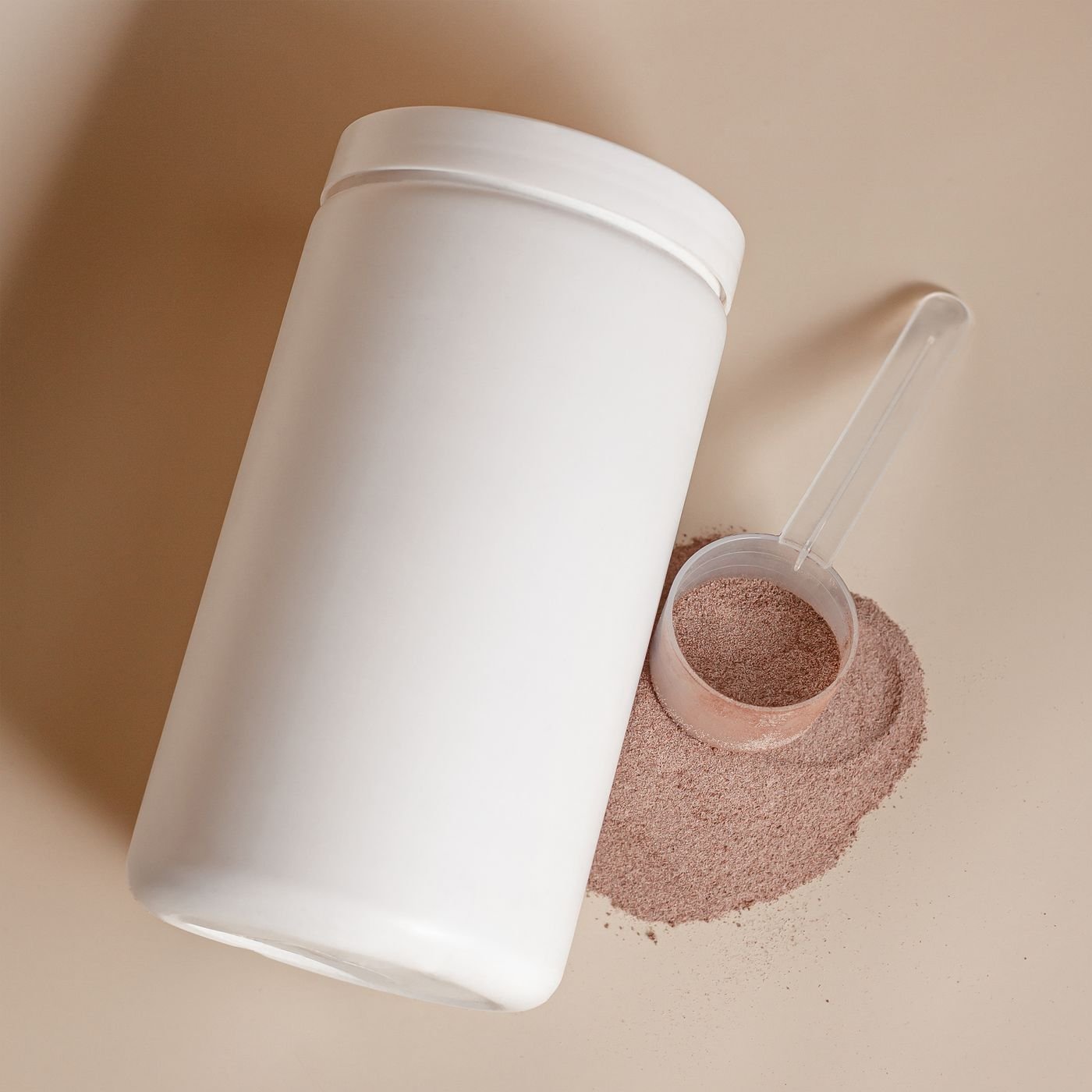
Why timing matters so little
Creatine doesn't work like caffeine. Caffeine has an acute effect, so when you take it obviously matters. Creatine works by raising the amount of phosphocreatine sitting in your muscle, and that store builds up slowly over weeks and then stays put.
Once you're saturated, you're saturated. A dose taken at 7am and a dose taken at 7pm both contribute to the same reservoir. The trials that compared pre-workout and post-workout dosing found differences that were small, inconsistent, and mostly within the noise.
Which makes the real question a much more boring one. Will you remember to take it every day?
Before or after a workout?
If you want the marginally better-supported option, take it after training, with a meal. A few studies suggest slightly better uptake alongside carbohydrate and protein, because insulin nudges creatine transport into muscle.
Be clear about the size of that edge though. We're talking about a small difference in a process that takes weeks to complete either way. Anyone promising a meaningful performance gap between pre and post is overselling it.
Take it whenever you'll actually take it. That beats optimising a variable this small.
Do you need a loading phase?
No. Loading means 20g a day, split into four doses, for 5 to 7 days, and it does exactly one thing: it gets your muscle stores full in about a week instead of about a month.
That's useful if you have a competition in ten days. For everyone else it's a week of taking four times as much powder, with a higher chance of the stomach upset that large single doses cause.
Skip it. Take 3 to 5g daily and you'll arrive at the same saturation point by week four.
Rest days, and the dose most people get wrong
Take it on rest days. This trips people up constantly, because the mental model is wrong. You're not fuelling today's workout, you're maintaining a store that took weeks to fill. Skipping days lets it drift down.
On dose: 3 to 5g a day covers almost everyone. Larger people at the top of that range, smaller people at the bottom. There's no benefit to 10g a day for general training, and the extra just gets excreted.
Buy plain creatine monohydrate. Not HCl, not buffered, not a proprietary blend with a name. Monohydrate is the form used in essentially every positive trial, and it's the cheapest.
What to expect in the first month
A kilo or two of weight gain in the first few weeks is normal and it's water held inside muscle cells, not fat and not bloat. Strength changes tend to show up as an extra rep or two per set rather than as a sudden jump.
If you feel nothing after six weeks of consistent daily use, that's worth knowing too. A minority of people are non-responders, usually because their dietary creatine intake was already high. Meat eaters start closer to saturation than vegetarians do.
Our full creatine guide covers the evidence behind all of this, including the kidney question and what the data says about women, who are badly underrepresented in the research.