
What's in the blend
BioLongevity Labs
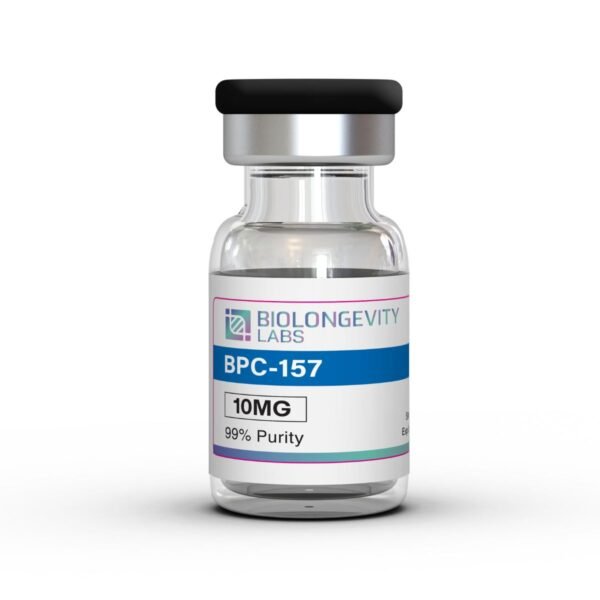
BPC-157 (10mg)
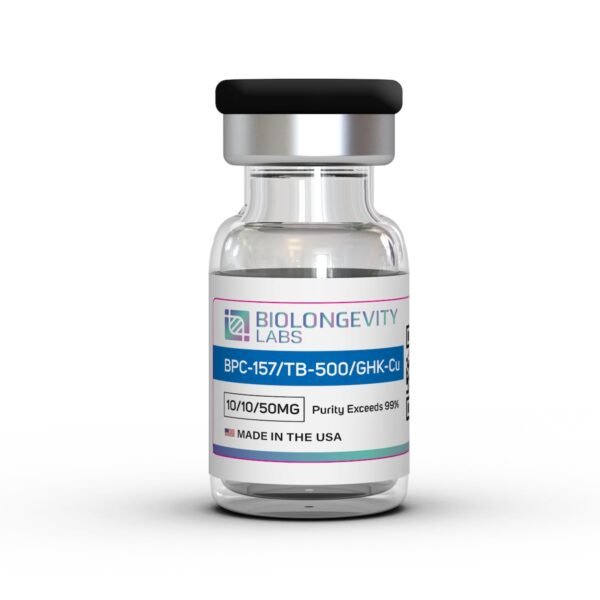
BioLongevity Labs lists its BPC-157 + TB-500 Blend (10mg) at $119.97. The product page states 5mg of BPC-157 and 5mg of TB-500 per vial, freeze-dried together, at a specified purity of at least 99% by HPLC. We read it on 18 November 2026.
The BPC-157 is the familiar 15-residue sequence, GEPPPGKPADDAGLV. The TB-500 is Ac-LKKTETQ, a seven-residue acetylated peptide matching residues 17 to 23 of thymosin beta-4. The page is unusually direct that this isn't the full 43-residue protein, which is useful, because plenty of vendors blur the two.
Like everything in the store it's sold for in vitro research only, under a research-use policy the buyer attests to at checkout. Nothing here is guidance on using either compound in people.
One vial or two: the cost per mg
BioLongevity prices, checked 18 November 2026, with the 15% from ATLAS15. Per mg is the list price divided by total peptide in the vial.
BPC-157 and TB-500 at BioLongevity Labs, checked 18 November 2026
What the numbers say
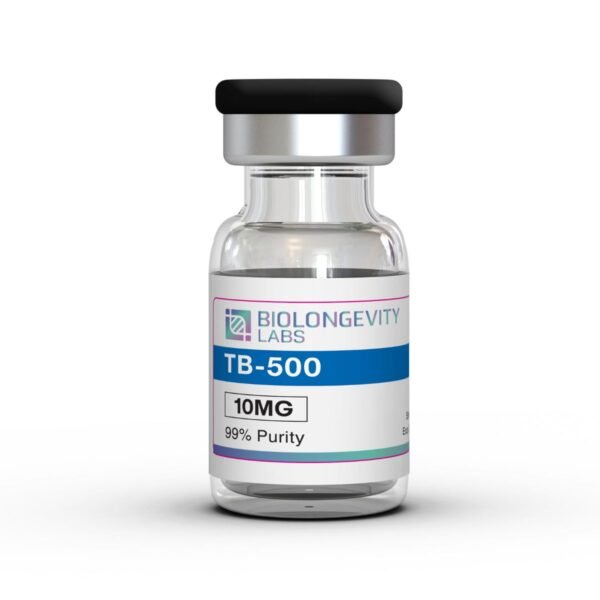
TB-500 is the expensive half. At $16.50 a mg against $10.00 for BPC-157, it accounts for most of the cost of any pairing. The blend charges $12.00 a mg for an even split, which sits below the $13.25 average you pay for the two single vials.
Matched like for like, two blend vials give you 10mg of each for $239.94, against $264.94 for one vial of each. That's $25 saved at list price, or $21.25 once ATLAS15 is applied to both baskets. It's a real saving, around 9%, though a modest one.
GLOW is the odd one out. For $20 more than two blends it carries the same 10mg of each plus 50mg of GHK-Cu, which is why the per mg figure looks so low.
Whether that's good value depends entirely on whether the GHK-Cu belongs in the work; our GLOW blend cost math runs that comparison, and the full price list has every vial in the store.
The trade-off: a fixed ratio
A blend locks the two compounds together. Every volume you draw carries equal mass of each, and there's no way to vary one without the other or run either on its own as a control. Two vials give you both options, at the higher price.
Equal mass doesn't mean equal molecules. BPC-157 weighs 1,419.5 g/mol and the TB-500 fragment 889.0 g/mol, per the product page. So 5mg of BPC-157 is about 3.5 micromoles and 5mg of the fragment about 5.6. Anyone comparing a blend to published work, which usually reports doses per compound and sometimes in molar terms, has to do that conversion.
TB-500 isn't one molecule
Limitless Biotech
TB-500 (Thymosin Beta-4)
The name TB-500 started as a label for a synthetic product built around the active region of thymosin beta-4. Analytical chemists studying it in doping control identified the N-acetylated 17 to 23 fragment, LKKTETQ, in products sold under that name (Drug Testing and Analysis, 2012). That's what BioLongevity sells.
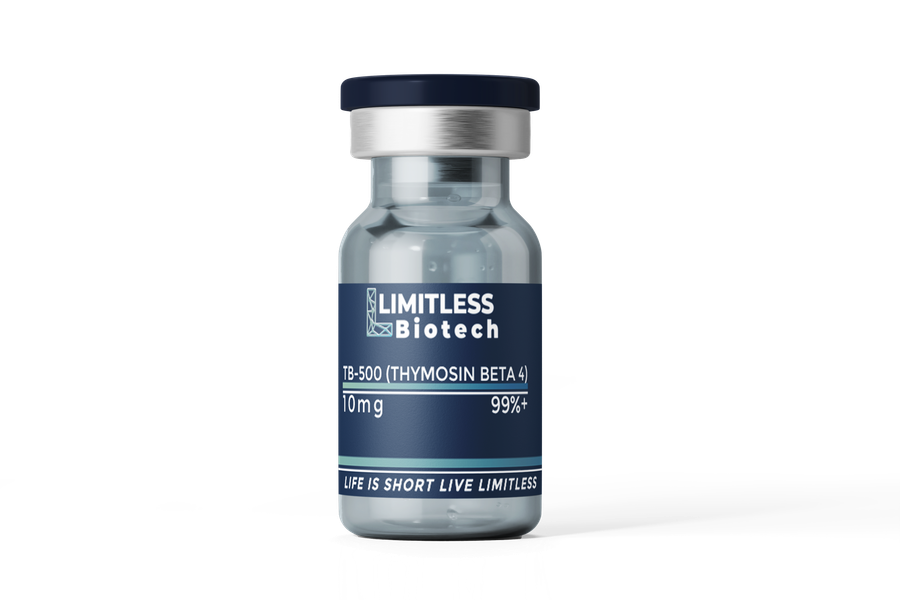
Limitless Biotech sells something else under the same name. Its TB-500 page lists the full 43-residue sequence of thymosin beta-4, molecular weight 4,963.55 g/mol, in 5mg and 10mg vials. Each lot, such as #1254 and #1303, has its own purity, sterility and endotoxin certificate.
The weight difference is large. 5mg of full-length thymosin beta-4 is about 1 micromole, against 5.6 for the fragment. And the human trials people cite for TB-500 used the full protein, not the fragment. Check which one a vendor means before comparing prices, research, or a certificate.
We couldn't find a pre-mixed BPC-157 and TB-500 vial at Limitless. It sells the two separately, prices are hidden until your account is approved, and Jiffy15 takes 15% off at Limitless Biotech.
What a blend COA can and can't show
The current certificate for BioLongevity's blend, reported on 18 May 2026 for batch 5-3-46143, was issued by MDx BioAnalytical Laboratory. It gives measured content of 5.06mg and 5.11mg against the 5/5mg label, a purity of 99.73%, and an endotoxin result that passed at a limit of 0.05 EU/mL. It's in the public COA library with no account needed.
Two limits apply to any blend certificate. First, purity is reported as one number for the mixture. A single figure tells you how much of the vial is neither compound, but not which compound any impurity belongs to. Separate vials get a purity figure each.
Second, MDx isn't one of the three labs named on BioLongevity's quality page, so it's worth checking the certificate with MDx directly using the search code printed on it.
One detail we'd ask about. The chromatogram on that certificate labels the second peak "TB-500 (TB-4 full-chain)", while the product page specifies the seven-residue fragment. It may be a template label, and the measured content matches the fragment spec, but a buyer comparing batches should ask the vendor which molecule the lab confirmed.
What the research says about each
Our BPC-157 vs TB-500 comparison covers the evidence properly. The short version, for blend buyers, is below.
- BPC-157's literature is large and mostly animal. Representative work includes tendon fibroblast outgrowth and migration in rats (J Appl Physiol, 2011) and VEGFR2 activation in endothelial cells (J Mol Med, 2017).
- Human data on BPC-157 is thin: a retrospective knee pain series (2021), a small interstitial cystitis pilot (2024), and a 2026 systematic review of what little exists.
- Full-length thymosin beta-4 has reached phase 2 human trials as an eye drop for dry eye (Cornea, 2015). The fragment hasn't. Its record is actin binding in vitro (1993) and analytical work.
- We found no published controlled study of BPC-157 and TB-500 given together (PubMed search, 18 November 2026). The case for pairing them is mechanistic reasoning, not data.
Reconstitution maths for a blend
A blend changes the arithmetic, because the 10mg on the label is the total. Add 2 mL of bacteriostatic water to the 10mg blend and the solution holds 5 mg/mL of peptide, which is 2.5 mg/mL of each compound. Every 0.1 mL drawn carries 250 mcg of BPC-157 and 250 mcg of TB-500.
The same 2 mL in a 10mg single vial gives 5 mg/mL of that one compound, twice the concentration. The common mistake with blends is treating the label total as the amount of either peptide, which doubles the figure. Our peptide calculator handles blends if you enter the per-compound mass, and the reconstitution guide walks through the method.
Which to buy
If the work calls for both compounds at equal mass, always together, the blend is cheaper and simpler: one vial, one certificate, about 9% less than buying separately. If you need to vary the ratio, run either compound alone, or see a purity figure for each, buy two vials.
Either way, buy from a vendor whose certificate you can read before paying. Our where to buy research peptides page sets out the checks, our BioLongevity Labs review covers what we verified, and best peptide companies ranks the wider field.