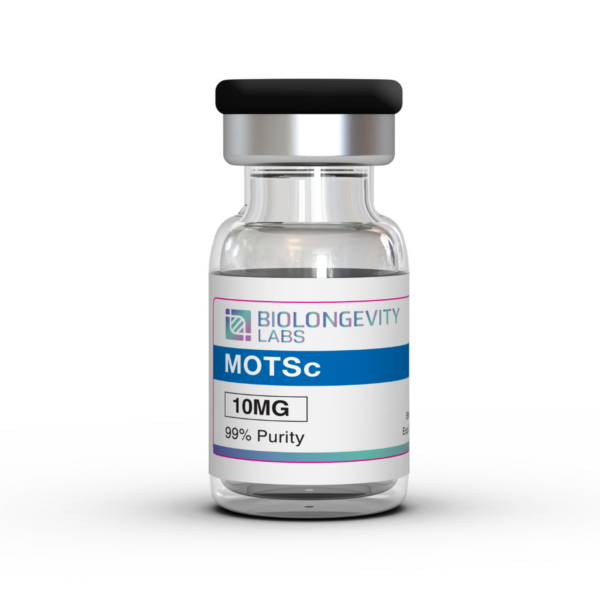

The two spellings
Start here because it affects what you find. Epithalon and epitalon are the same molecule. So is Epitalon's longer relative epithalamin, which is a peptide extract rather than the synthetic tetrapeptide.
Google treats the two spellings as separate terms, and the volume splits roughly two to one in favour of epithalon. If you are researching this compound, search both, because different sources use different spellings and you will miss half the material otherwise.
What it is
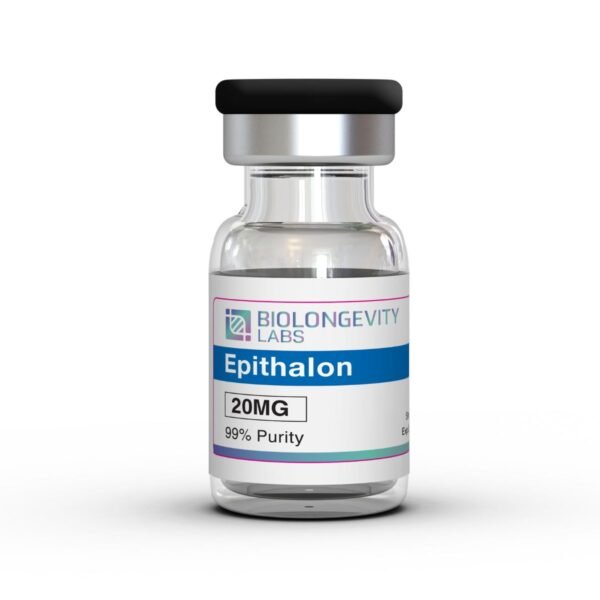
BioLongevity Labs
Epithalon (20mg)
Epithalon is a synthetic tetrapeptide: four amino acids, alanine-glutamate-aspartate-glycine, usually written Ala-Glu-Asp-Gly or AEDG.
It was developed as a synthetic version of epithalamin, an extract of the pineal gland. The underlying idea was that pineal peptides regulate ageing processes, and that a defined synthetic sequence could reproduce the effect of the extract.
Of the vendors we review, only BioLongevity Labs stocks it, at 20mg.
Where the research actually comes from
This is the part most pages about epithalon leave out, and it is the most important thing to understand before reading any claim about it.
The great majority of the published work comes from Vladimir Khavinson and colleagues at the St Petersburg Institute of Bioregulation and Gerontology, across roughly four decades. That body of work includes animal lifespan studies, cell culture work on telomerase, and some human observational data.
A research programme concentrated in one group is not automatically wrong. It is, however, a different evidence situation from a compound replicated independently across many labs. Independent replication of the central telomerase findings outside that group is sparse, and that gap is the honest headline here.
The claims, graded
Taking them in the order people encounter them.
| Claim | Evidence | Our read | Buy |
|---|---|---|---|
| Activates telomerase, lengthens telomeres | Cell culture work, largely from one group | The headline claim and the least independently replicated | Shop |
| Extends lifespan | Rodent studies from the same programme | Animal data. No human lifespan evidence exists for any compound | |
| Normalises melatonin and sleep rhythm | Pineal-axis rationale plus some human observation | Mechanistically coherent, thin human data | |
| Antioxidant and immune effects | Animal and in vitro | Plausible, not specific to this compound |
What each epithalon claim actually rests on
The dosing figures in circulation
Every number below comes from community protocols and vendor literature rather than from published dose-finding work. We publish them because people search for them, and we label them because the distinction matters.
The common pattern is 5 to 10mg daily for 10 to 20 consecutive days, run once or twice a year rather than continuously. The cycled approach reflects how the original research was structured, with courses rather than ongoing use.
A 20mg vial therefore covers a short course at the higher end or two at the lower. Our calculator converts a chosen figure into syringe units, and our reconstitution guide covers the mechanics.
What nobody can tell you
Longevity claims have a structural problem that applies to epithalon more than almost anything else: you cannot assess them on a personal timescale. There is no marker you can check next month that tells you whether a lifespan effect happened.
That makes the compound unusually resistant to the normal feedback loop, where you try something and judge it. It also makes it unusually easy to sell. Both things are worth sitting with before spending money on a course.
Our are peptides safe page covers the broader risk picture, and everything referenced here is sold for research use only. Nothing on this page is medical advice.