

Why these four get grouped together
GHK-Cu, the KLOW stack, CJC-1295 and Thymosin Alpha-1 show up together constantly: in blend products, in forum stacks, in the same vendor category pages. Each one has a different evidence picture, though, and lumping them into one dosing conversation hides that.
This page puts the four side by side so the differences are visible, rather than repeating one vague "research dose" figure across all of them.
GHK-Cu: where the dosing figure comes from
BioLongevity Labs
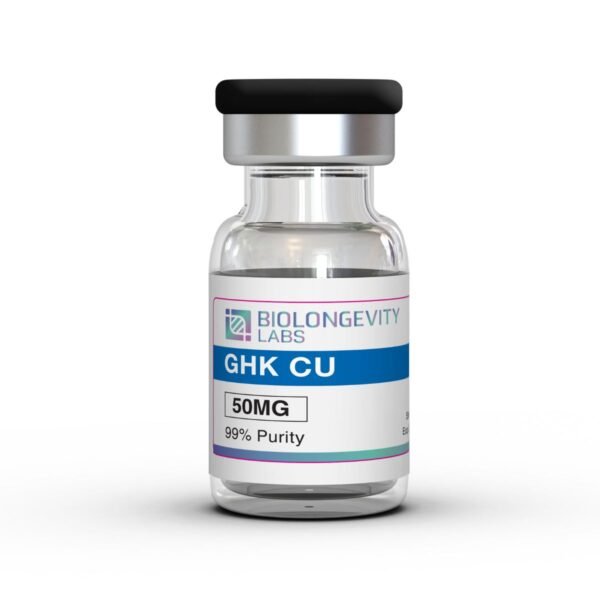
GHK-Cu Copper Peptide (50mg)
GHK-Cu is a naturally occurring copper-binding peptide. Studied mostly for skin, wound healing and collagen signaling. It has more cosmetic-formulation research behind it than the other three compounds here, including some human skin studies.
Those studies used topical formulations, though. Not the injectable form sold by research-peptide vendors.
Online dosing discussion for the injectable form commonly centers on roughly 1 to 2mg per day. That figure draws on a mix of the topical cosmetic literature, scaled differently, plus community practice. No dedicated injectable human trial backs it.
KLOW stack: four compounds, four separate extrapolations
BioLongevity Labs
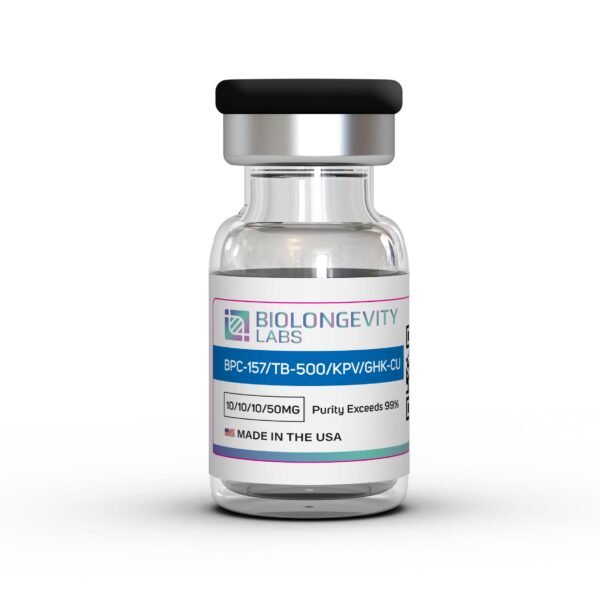
KLOW Blend (80mg)
KLOW blends GHK-Cu, BPC-157, TB-500 and KPV into a single vial, sold by multiple vendors including BioLongevity Labs as an 80mg combined-weight product. The appeal is one reconstitution and one injection instead of four.
The dosing question gets more complicated here. A KLOW dose has no research behind the combination itself. What it really is: each compound's individually extrapolated dose, delivered at the same time. BPC-157 and TB-500 both carry the no-human-trial caveat covered in the BPC-157 dosage guide. A vendor's "suggested KLOW dose" is a practical blend ratio. Not a studied protocol.
| Compound | Dosing evidence basis |
|---|---|
| GHK-Cu | Topical cosmetic studies, scaled to injectable use informally |
| BPC-157 | Animal studies, no human trial |
| TB-500 | Animal studies, thinner literature than BPC-157 |
| KPV | Early-stage animal and in vitro research only |
What's inside a typical KLOW blend, dosing-evidence basis
CJC-1295: the DAC question changes everything
BioLongevity Labs
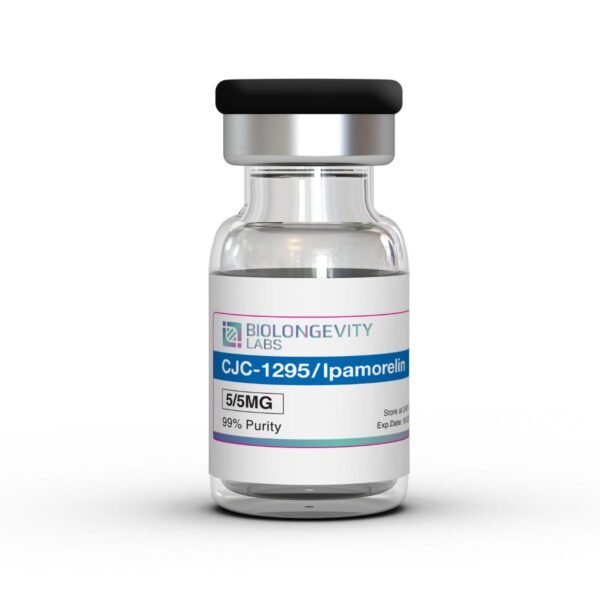
CJC-1295 & Ipamorelin Blend (10mg)
CJC-1295 comes in two forms. With DAC (drug affinity complex), and without. Online, people discuss them almost interchangeably, despite behaving differently. DAC extends how long the compound stays active in circulation. That's the entire reason it exists as a separate formulation.
Community dosing for the no-DAC version commonly runs more frequent, smaller doses, often daily. The DAC version gets dosed less often, because of that extended activity. Mixing up which version a dosing figure was written for is a common sourcing mistake here. "CJC-1295" alone doesn't say which one.
Thymosin Alpha-1: the one with real clinical history
BioLongevity Labs
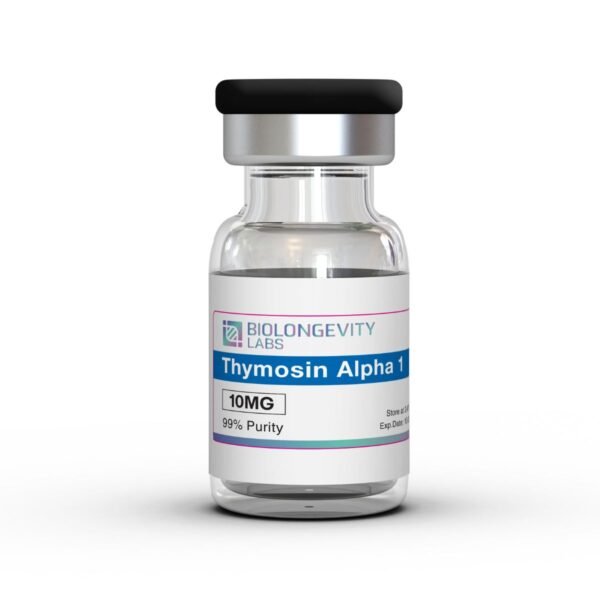
Thymosin Alpha 1 (10mg)
Thymosin Alpha-1 stands apart from the other three. It has actual human clinical use in some countries, under the brand name Zadaxin, for immune-related indications. A real body of published human pharmacokinetic data exists for it too.
That history doesn't transfer cleanly, though. Clinical protocols used specific formulations, dosing schedules and medical supervision. A research-chemical purchase includes none of that. Online dosing discussion still draws partly on the clinical literature and partly on community figures, a different mix than the other three compounds here, where almost nothing is clinical.
Reconstitution still applies to all four
Whatever dose figure you're working from, getting from a milligram vial to a microgram or milligram draw on a syringe is the same arithmetic across all four compounds. The reconstitution calculator guide walks through that math with worked examples.
The honest summary
None of these four compounds has a dosing figure that comes from a dedicated, published human trial for the research-use product as sold. Thymosin Alpha-1 comes closest, through its separate clinical history. The other three run almost entirely on animal data and community consensus, the same pattern covered in more depth for BPC-157 specifically.
Treat every number on this page as a description of where online dosing conversation currently sits, not a recommendation.
Comparing sources for these four? Our BioLongevity Labs review covers its testing labs and certificates, and code ATLAS15 takes 15% off there. Details on the BioLongevity Labs discount code page.