
What these compounds actually do
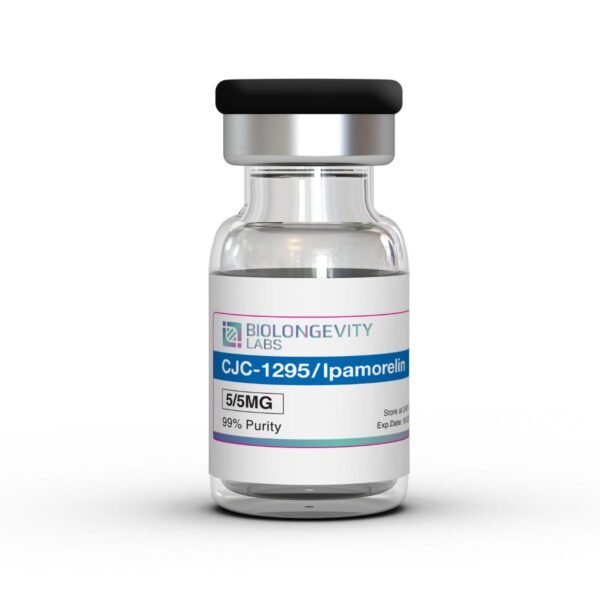
BioLongevity Labs
CJC-1295 & Ipamorelin Blend (10mg)
The muscle-focused peptides are almost all growth hormone secretagogues. They prompt your pituitary to release more of its own growth hormone rather than supplying any directly.
They split into two mechanisms, which is why they get paired.
GHRH analogues (sermorelin, CJC-1295) mimic growth-hormone-releasing hormone and increase the amount released per pulse. Ghrelin mimetics or GHRPs (ipamorelin, hexarelin) work through a separate receptor and increase pulse frequency while suppressing somatostatin.
Combining one of each is the logic behind the CJC-1295 and ipamorelin stack, which is the most searched combination in this space at around 49,500 US searches a month. That rationale is genuinely coherent. What follows from it is where the trouble starts.
The part the marketing skips
Growth hormone has been studied extensively in healthy adults, including in sports contexts. The findings are consistent and awkward for anyone selling GH secretagogues for muscle.
GH administration increases lean body mass on a scale. It also increases it substantially through fluid retention rather than contractile protein. Studies measuring strength and performance alongside body composition generally fail to find the strength gains the mass figures imply.
So the chain of reasoning, more GH means more lean mass means more muscle and strength, breaks at the last link. And that is for administered GH at clinical doses, which is a larger intervention than a secretagogue produces.
None of that makes these compounds inert. It means the specific claim they are sold on is the one the evidence does not support.
Compound by compound
What each one has behind it, stated without padding.
| Compound | Mechanism | Clinical context | Muscle evidence | Buy |
|---|---|---|---|---|
| Sermorelin | GHRH analogue | Was prescribed for paediatric GH deficiency | None in healthy adults | Shop |
| CJC-1295 (no DAC) | GHRH analogue, short acting | Research only | None | Shop |
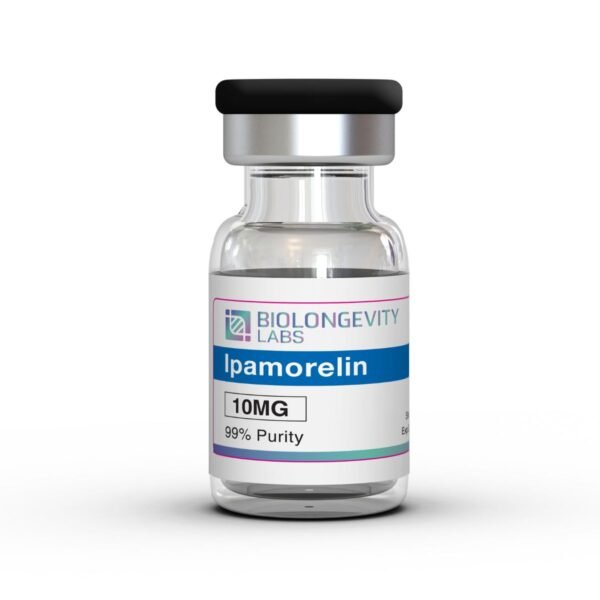
| Ipamorelin | Selective GHRP | Research only; selectivity is its selling point | None | Shop |
| Hexarelin | GHRP, less selective | Research only | None | |
| MOTS-c | Mitochondrial, metabolic | Human biomarker studies | Not a muscle compound | Shop |
Growth hormone secretagogues
Why ipamorelin gets singled out
One genuine point in its favour, and it is about side effects rather than effect.
Earlier GHRPs raised cortisol and prolactin alongside growth hormone, and caused significant hunger through ghrelin receptor activity. Ipamorelin is more selective: it stimulates GH release with less effect on cortisol and prolactin.
That's a real pharmacological distinction, and the reason it displaced older compounds in these protocols. Ipamorelin is a cleaner version of the mechanism. Cleaner, but still the same mechanism, which still doesn't produce muscle.
The dosing figures
From community protocols, not trials, as everywhere else in this category.
Ipamorelin is commonly described at 200 to 300mcg, once to three times daily, often timed before bed to coincide with natural GH pulses. CJC-1295 without DAC is described at 100mcg on a similar schedule. Sermorelin figures cluster around 200 to 500mcg.
The before-bed timing has a real rationale, since GH release is naturally pulsatile and largest in early sleep. Whether adding to that pulse achieves anything is the open question.
Our calculator converts any of these into syringe units, and has presets for the vials our vendors stock.
What actually builds muscle
Worth saying, because it's the honest answer to the question behind the search.
Progressive resistance training and adequate protein have the strongest evidence of anything in this field by a wide margin. Creatine monohydrate has more and better human trial data behind it than every compound on this page combined, and costs a fraction of one vial.
If the question is which peptide replaces that, the answer on current evidence is none of them. Our peptides vs steroids page covers why the comparison people reach for does not hold either.
Everything referenced here is sold for research use, and nothing on this page is medical advice.