
Why the evidence is better here
Almost every peptide on this site faces the same problem: it has to reach a tissue somewhere inside you, which means absorption, distribution and degradation all stand between the vial and the effect.
Skin removes that problem. The target organ is on the outside. A topical peptide is applied directly to the tissue it is meant to act on, which is why cosmetic peptide research has produced usable human data while most of the injectable category has not.
That is the whole reason this page can be more positive than the rest of our peptide coverage, and it is worth holding onto when reading claims about any compound delivered another way.
GHK-Cu, the strongest case
BioLongevity Labs
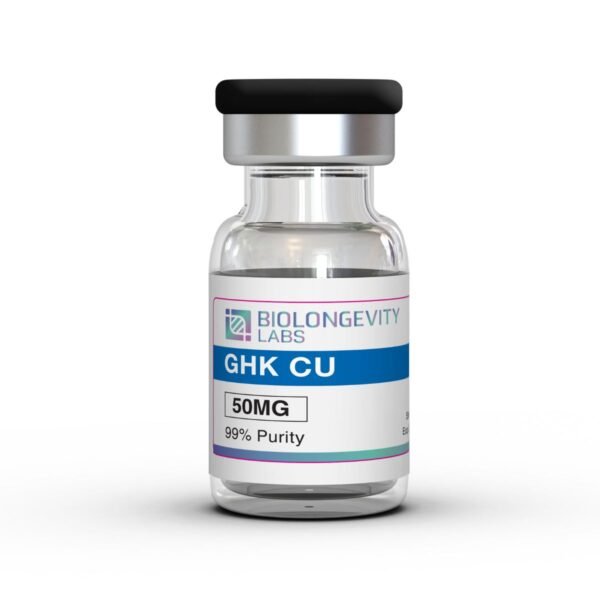
GHK-Cu Copper Peptide (50mg)
GHK-Cu is a copper-binding tripeptide that occurs naturally in human plasma and declines with age. It has been studied since the 1970s, with work covering wound healing, collagen synthesis and antioxidant activity.
What makes it stand out is not just the volume of research but its type: there is genuine human work on topical application, including on skin firmness and fine lines. Our copper peptides deep dive covers that literature properly.
The thing to be careful about is route. The published skin work is overwhelmingly topical. Vendors sell GHK-Cu as a lyophilised vial for reconstitution and injection, and the topical evidence does not transfer to that route. Of the vendors we review, BioLongevity Labs stocks it at 50mg and Limitless Biotech at a smaller size.
The cosmetic signal peptides
A whole separate family sits in skincare formulation, and these rarely appear in research-peptide catalogues at all.
Matrixyl (palmitoyl pentapeptide-4) and its variants are the most studied, with published work on wrinkle depth and skin thickness. Argireline (acetyl hexapeptide-8) is marketed on a neuromuscular mechanism, with more modest and more contested evidence.
The honest summary for this group is that effects are real and small. They are formulation ingredients with measurable but incremental results, which is a very different claim from what the research-vial market makes, and a more defensible one.
| Compound | Route | Evidence | Buy |
|---|---|---|---|
| GHK-Cu | Topical, well studied | Strongest in the category. Human topical work on firmness and fine lines | Shop |
| GHK-Cu | Injected | The topical evidence does not transfer | |
| Matrixyl (palmitoyl pentapeptide-4) | Topical cosmetic | Published work on wrinkle depth, modest effects | |
| Argireline (acetyl hexapeptide-8) | Topical cosmetic | More contested, smaller effects | |
| Collagen peptides | Oral | Mixed, and weaker than the marketing implies | |
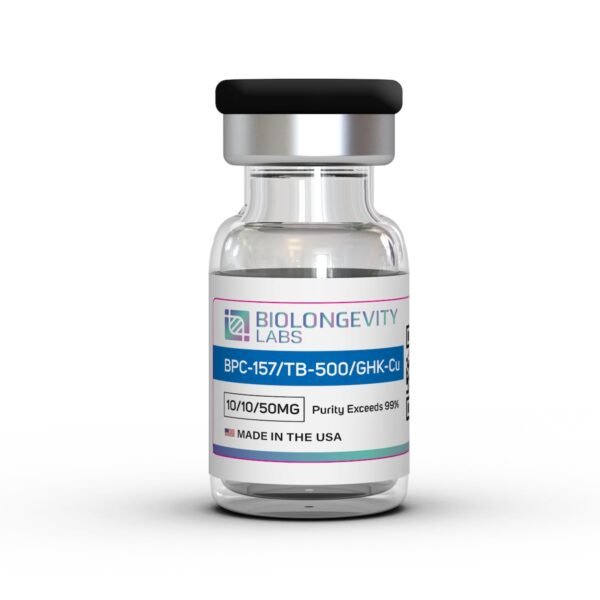
| BPC-157, TB-500 | Injected | Repair claims, very limited human data | Shop |
Skin peptides by route and evidence
Oral collagen, which is not the same thing
Collagen peptides get swept into these searches and they belong to a different conversation entirely.
Oral collagen is hydrolysed protein. Digestion breaks it into amino acids and short fragments, and the proposed mechanism is that certain fragments signal for collagen synthesis rather than that the collagen you ate becomes collagen in your skin.
The human trials exist and are genuinely mixed, many are industry-funded, and the effects reported are small. It is not useless and it is not what the marketing says.
If you want the one with the best odds
On current evidence it is topical GHK-Cu, and the reason is that the research matches the way you would actually use it.
That is also the least profitable answer for everyone selling research vials, which is part of why the injectable framing gets pushed harder. Our are peptides safe page covers the broader risk picture, and the vendor vetting guide covers what to check if you buy a vial anyway.
Everything referenced from these vendors is sold for research use, and nothing on this page is medical advice.