
The naming thing first
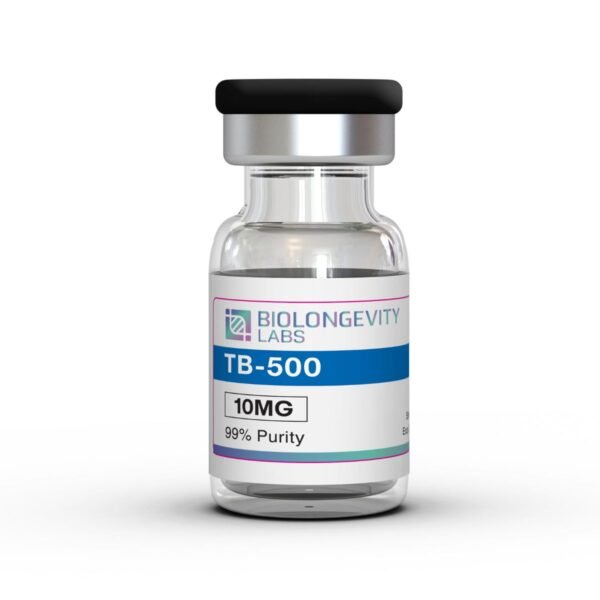
BioLongevity Labs
TB-500 (10mg)
Thymosin beta-4 is a 43-amino-acid protein found naturally in human cells, with a genuine research literature behind it in tissue repair and cell migration.
TB-500 is a synthetic fragment of it, a short sequence from the active region rather than the whole molecule. The rationale is that the fragment carries the relevant activity at a fraction of the manufacturing cost.
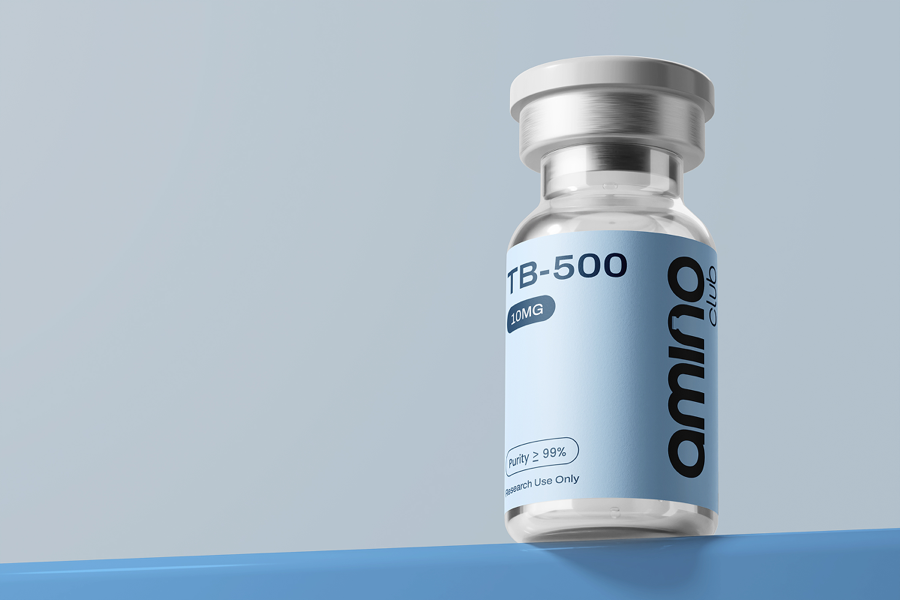
Vendors and community sources use the two names interchangeably, including the vendors we review: BioLongevity Labs lists TB-500 at 10mg and Limitless Biotech lists it as TB-500 (Thymosin Beta-4).
That matters when you read research. A study on thymosin beta-4 is not automatically a study on what is in the vial, and that distinction is almost never drawn in the material people find.
The protocol in circulation
Consistent enough across sources to be worth stating plainly, with the usual caveat attached: these come from community practice and vendor literature, scaled from animal studies, not from human dose-finding trials.
Loading phase: 2 to 2.5mg twice a week, for four to six weeks. That is the part people mean when they say loading.
Maintenance: the same dose once a week, or once every two weeks, for as long as the protocol runs.
The loading-then-maintenance structure is borrowed from how the compound was dosed in animal repair studies rather than derived from pharmacokinetics in people.
Conversion chart for a 10mg vial
Reconstituted with 2ml of bacteriostatic water, giving 5mg per ml. Arithmetic only, no recommendation.
| Dose | Volume | Units | Doses per vial |
|---|---|---|---|
| 2.5 mg | 0.5 ml | 50 units | 4 |
| 2.0 mg | 0.4 ml | 40 units | 5 |
| 1.0 mg | 0.2 ml | 20 units | 10 |
| 5.0 mg | 1.0 ml | 100 units | 2 |
10mg vial in 2ml water, U-100 syringe
What a loading phase actually costs
Worth doing the sum before committing, because this is where TB-500 gets expensive relative to its vial price.
At 2.5mg twice weekly, a loading phase is 5mg a week. A 10mg vial is therefore two weeks. A six-week loading phase needs three vials before maintenance even starts.
At BioLongevity's $164.97 for 10mg, that is roughly $495 of loading, or $420 with ATLAS15. Compare that with Amino Club at $39.99, where the same loading phase is around $120. Our price comparison covers what the gap does and does not buy.
On stacking it with BPC-157
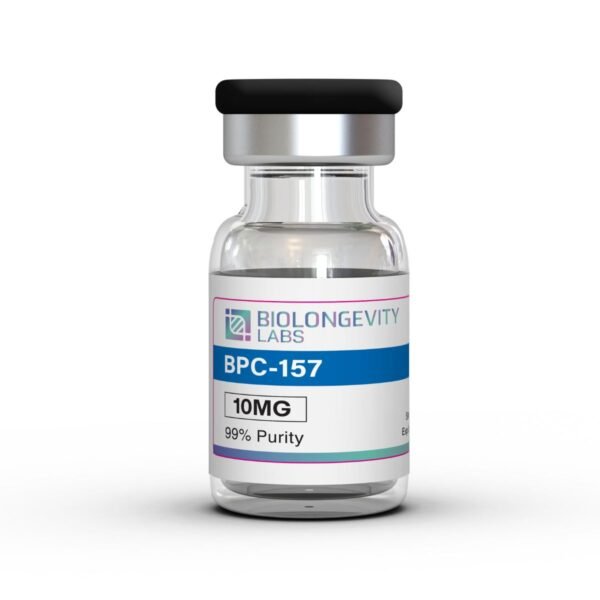
These two are paired constantly, to the point where several vendors sell a combined product. Amino Club lists a BPC-157/TB-500 blend as Wolverine.
The rationale offered is complementary mechanisms on tissue repair. The evidence for the combination specifically, as opposed to each compound separately, does not exist in human trials. Our BPC-157 vs TB-500 comparison sets out what each one has behind it.
Pairing two compounds with thin individual evidence does not produce strong combined evidence, and that is worth saying plainly given how routinely the stack is recommended.
Before working out a dose
Check the certificate for the batch, since this is an injected compound and endotoxin testing is the one most often missing. Our vendor vetting guide covers what to look for and are peptides safe sets out the broader picture.
Our peptide calculator converts any figure into syringe units. Everything here is sold for research use, and nothing on this page is medical advice.