
Why this one is different
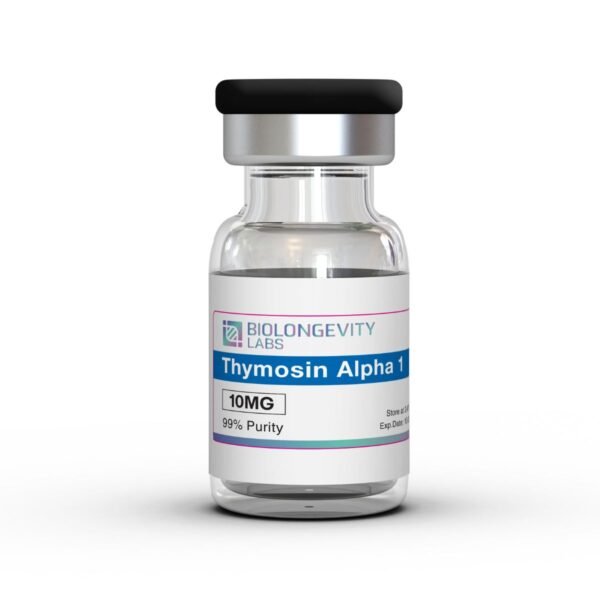
BioLongevity Labs
Thymosin Alpha 1 (10mg)
Almost every compound on this site shares a profile: interesting mechanism, animal data, thin or absent human trials. Thymosin alpha-1 breaks that pattern.
It is a 28-amino-acid peptide derived from thymosin fraction 5, and it has been approved and marketed as Zadaxin in a number of countries, principally for chronic hepatitis B. There is a real regulatory file and a real clinical literature behind it, including work in sepsis and as a vaccine adjuvant.
Both vendors we review stock it: BioLongevity Labs and Limitless Biotech, both at 10mg.
What the approval actually covers
This is where the compound's record gets stretched, so it is worth being exact.
The clinical evidence sits in specific disease settings: chronic hepatitis B, some cancer adjuvant protocols, sepsis, and immune reconstitution in particular patient groups. It was studied in people who were ill, under supervision, with monitoring.
None of that establishes anything about taking it while healthy for general immune support, which is how it is usually discussed online. An immune modulator studied in immunocompromised patients is not the same proposition as an immune booster for someone well.
The honest version: the clinical record is real and it is narrower than the marketing around the research vial implies.
| Setting | Evidence | Relevance to a research vial | Buy |
|---|---|---|---|
| Chronic hepatitis B | Approved use in several countries | Specific disease, supervised, monitored | Shop |
| Sepsis | Clinical trials, mixed results | Hospital setting | |
| Cancer adjuvant protocols | Trial evidence in combination regimens | Alongside other treatment | |
| General immune support in healthy adults | None | The way it is usually discussed online |
What the evidence does and does not cover
The dosing figures
Unusually for this category, the circulating research protocol tracks the clinical dosing fairly closely, which gives the number a better provenance than most.
The common figure is 1.5mg twice weekly, which is close to the 1.6mg twice-weekly schedule used in the hepatitis B literature. Some protocols run shorter courses at higher frequency.
At 1.5mg twice weekly, a 10mg vial is a little over three weeks.
| Dose | Volume | Units | Doses per vial |
|---|---|---|---|
| 1.5 mg | 0.3 ml | 30 units | 6 |
| 1.6 mg | 0.32 ml | 32 units | 6 |
| 3.2 mg | 0.64 ml | 64 units | 3 |
| 0.8 mg | 0.16 ml | 16 units | 12 |
10mg vial in 2ml water, U-100 syringe
The gap between Zadaxin and a research vial
Worth stating because it is the thing the clinical record can obscure rather than support.
Zadaxin is a pharmaceutical product: manufactured to pharmacopoeial standard, with a regulator checking identity, purity and sterility, prescribed and monitored.
A research vial of thymosin alpha-1 is the same molecule with none of that apparatus. Purity, sterility and endotoxin are whatever the seller's certificate says, and the vendors we review differ sharply on how much that certificate is worth. BioLongevity names three testing labs, two verifiable at source. Limitless publishes per-lot documents but names no lab.
So the clinical literature tells you about the molecule. It tells you nothing about the vial, and conflating the two is the most common error made about this compound.
Where we land
If you want the compound in this catalogue with the most actual evidence behind it, this is it. That is a real distinction and worth knowing.
It comes with two conditions. The evidence is for sick people under supervision, not well people self-administering. And the product sold here is not the product that was studied, however identical the sequence.
Our peptides for inflammation page covers how it compares with KPV and BPC-157 on that endpoint, and are peptides safe sets out the risk picture. Everything referenced is sold for research use, and nothing here is medical advice.