
Why these three
Search for peptides and inflammation and the same three names come back. They are not interchangeable, and the reasons people reach for each one differ a lot.
Worth saying at the start: inflammation is not one thing. Acute inflammation after an injury, chronic low-grade systemic inflammation, and inflammatory bowel conditions are different processes. A compound with evidence in one tells you very little about the others, and most online writing on this topic glosses over that entirely.
KPV, the one with the clearest rationale
BioLongevity Labs
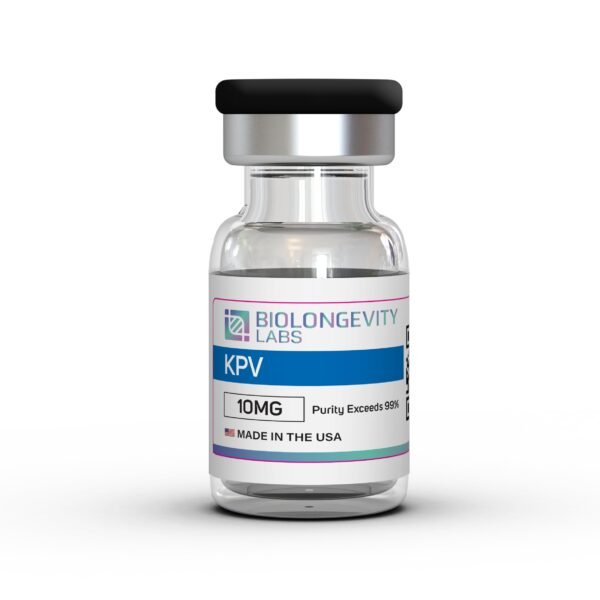
KPV (10mg)
KPV is a three-amino-acid fragment (lysine, proline, valine) of alpha-melanocyte-stimulating hormone. Alpha-MSH has documented anti-inflammatory activity, and KPV appears to retain that part of the activity without the pigmentation effects of the parent molecule.
That is a coherent mechanism rather than a marketing story, which is more than can be said for a lot of this category. The published work is largely preclinical, with particular attention to gut inflammation in animal models.
What it does not have is controlled human trial data at the doses people use. So the mechanism is sound and the human evidence is not there, which is a fair summary of the whole field.
Both BioLongevity Labs and Limitless Biotech stock it at 10mg and 5mg respectively.
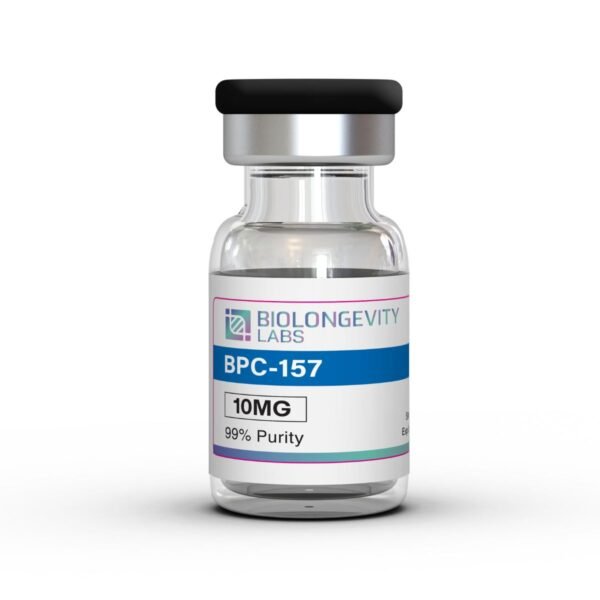
BPC-157, the loudest and the thinnest
BPC-157 carries more search volume than every other research peptide combined, and the inflammation claims are part of that. The animal literature on tissue repair is genuinely extensive.
Published human trials are very limited. The oral safety work that does exist does not transfer to injected use, which is how most people take it. Our BPC-157 dosage guide sets out where the circulating figures actually come from, and it is not from dose-finding trials.
None of which makes it useless. It makes the confidence of the internet about it unwarranted.
Thymosin alpha-1, real history, narrow relevance
BioLongevity Labs
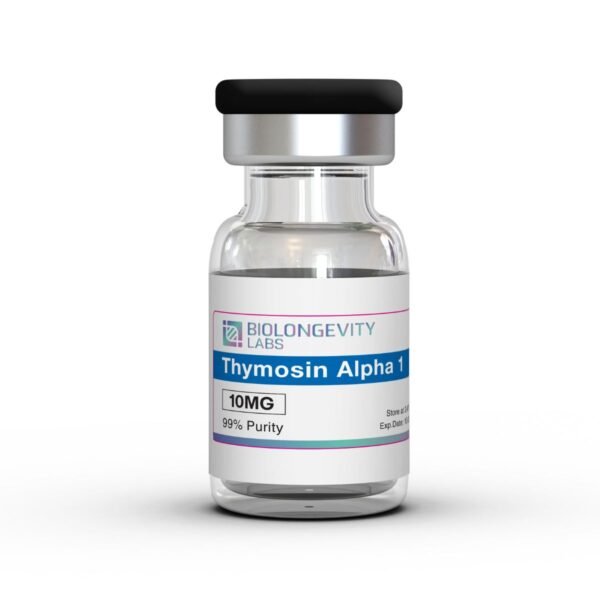
Thymosin Alpha 1 (10mg)
This is the one with actual clinical use behind it. Thymosin alpha-1 has been studied and used as an immune modulator, with the most substantial work in hepatitis B and in sepsis.
That history is worth something, and it is also narrower than the way the compound gets discussed. Immune modulation in a specific disease, under supervision, at clinical doses, is not the same proposition as taking it for general inflammation.
If you want the clinical literature, it exists and it is findable, which already puts this ahead of most of the catalogue.
What each is actually documented for
Stated precisely, because the difference between these rows is the whole point of the page.
Evidence base by compound
On the dosing figures you will find
Every protocol circulating for these compounds is extrapolated: from animal studies, from clinical use of a related molecule, or from community consensus that hardened into a number through repetition.
We publish those figures on our dosing hub and we label them as what they are. A number appearing on fifty websites is not the same as a number from a dose-finding trial, and the gap between those two things is where most of the risk in this category lives.
Our reconstitution calculator handles the arithmetic once you have decided on a figure. It does not tell you the figure is right.
What we would actually check first
Before any of the above matters, the vial has to contain what the label says. For an injected compound aimed at inflammation, sterility and endotoxin testing matter as much as purity, and endotoxin is the test most often missing from a certificate.
Our vendor vetting guide covers what a certificate should show, and are peptides safe goes through the risk picture properly. Everything here is labelled for research use, nothing on this page is medical advice, and an inflammatory condition is a reason to see a clinician rather than a reason to buy a vial.