

What klotho is
Klotho is a large protein made mostly in the kidney, with smaller amounts in the brain's choroid plexus and a few other tissues. The name comes from Clotho, the Greek Fate who spins the thread of life, and it was chosen after one striking experiment.
In 1997 Makoto Kuro-o and colleagues in Tokyo described a mouse strain with a disrupted klotho gene. The animals looked normal at first, then developed a cluster of problems that resemble ageing: hardened arteries, thin bones, wasted skin and muscle, emphysema, and a short life. The paper ran in Nature and started a field.
Eight years later the same group showed the reverse. Mice engineered to make extra klotho lived longer than normal mice, and the protein appeared to act as a circulating hormone that dampens insulin and IGF-1 signalling (Kurosu et al., Science, 2005).
There are three related proteins: alpha, beta and gamma klotho. When people say klotho, they almost always mean alpha-klotho, which is the one in this article.
The kidney job: FGF23 and phosphate
The most solid biology is less glamorous than the lifespan headlines. Alpha-klotho sits on kidney cells and pairs with FGF receptors so they can respond to FGF23, a hormone released by bone that tells the kidney to dump phosphate. Without klotho, FGF23 has nowhere to land. That was shown in Nature in 2006.
This explains much of the knockout mouse picture. Without working klotho, phosphate builds up, vitamin D runs high, and calcium deposits form in blood vessels and soft tissue. Some of the ageing-like damage in those mice eases when phosphate is brought down.
Part of the protein can also be clipped off the cell surface and released into the blood. That piece is called soluble klotho, and it's what blood tests measure and what most of the injected-protein research uses.
Klotho levels and ageing in people
The first reliable blood test for soluble klotho came out of Kyowa Hakko Kirin in 2010. In 142 healthy adults, levels ranged from 239 to 1,266 pg/mL with a mean of 562. Children averaged 952, and levels in adults fell with age and with worse kidney function (Yamazaki et al., 2010).
Later observational studies link low klotho with chronic kidney disease, weaker grip strength in older adults and poorer outcomes in several conditions. These are associations. A low level could be a cause, a consequence of kidney decline, or a marker of general frailty, and these studies can't separate the three.
Commercial klotho assays also disagree with each other, which makes it hard to compare numbers across studies or interpret a single personal result.
The brain studies, mice to monkeys
The research that turned klotho into a longevity talking point came from Dena Dubal's lab at UCSF. Mice with raised klotho learned and remembered better, with stronger signalling through NMDA receptors in the hippocampus (Dubal et al., Cell Reports, 2014).
In 2023 the same group, with Yale and Unity Biotechnology, tested the rhesus form of the protein in aged rhesus macaques, average age about 22 (Castner et al., Nature Aging). Eighteen monkeys did spatial memory tasks after a single injection under the skin.
The low dose, 10 micrograms per kilogram, improved performance within hours, and the effect lasted at least two weeks. The higher doses didn't help.
That inverted dose curve matters. More was not better, which is a reason for caution with any product sold on the idea of topping up a falling hormone.
Several authors held patents and shares in companies developing klotho treatments, which the paper declares. The work is still well regarded, and this is a normal disclosure for translational research.
The gap between animal research and human use
Here is the plain position as of 18 November 2026. Every result above comes from mice, monkeys or cells. No published, completed trial has given people injected klotho protein and measured whether it does anything for memory, kidneys or ageing.
ClinicalTrials.gov lists early human work on other routes: a plasmid gene therapy, a combined klotho and follistatin gene therapy, and a Phase I mRNA study in 20 healthy volunteers that began in October 2026. None tests a vendor's recombinant protein, and none has published efficacy data.
So the honest summary is: interesting biology, a consistent animal signal, an unknown human dose, unknown human safety, and no regulatory approval for any klotho therapy anywhere. A research vial doesn't close that gap.
What BioLongevity sells as alphaKlothoLR
The product page lists "Klotho (alphaKlothoLR) (20mcg)" at $299.00, checked 18 November 2026. One unit is a pair of vials; the SKU reads KLO-MAB-10MCG-2PK and both certificates are labelled 10 mcg, so the 20 mcg in the title is the total across two vials. Larger packs run to $7,176 for 24 pairs with up to 15% off.
BioLongevity describes it as a patented, long-release version of recombinant alpha-klotho: the 1,012-amino-acid protein joined by a glycine-serine linker to a 29-amino-acid albumin-binding tag. Binding to albumin, the most common blood protein, is a standard way to slow clearance.
The page claims FGF23 binding of 15 to 30 nM and cellular activity of up to 19 days. We couldn't verify the 19-day figure. A US patent, 12,377,158, covers albumin-binding constructs and claims an alpha-klotho version with the same FGF23 binding range.
It's also listed as a Signature product. Our upcoming look at the BioLongevity Labs Signature line puts it next to Cell Factors, Apileen, FLGR242 and BioG.
| Pack | Vials | Price | Buy |
|---|---|---|---|
| 1 pair | 2 x 10 mcg | $299.00 | Shop |
| 6 pairs | 12 x 10 mcg | $1,794.00 | Shop |
| 12 pairs | 24 x 10 mcg | $3,588.00 | Shop |
| 24 pairs | 48 x 10 mcg | $7,176.00 | Shop |
Klotho (alphaKlothoLR) pack sizes, read from biolongevitylabs.com on 18 November 2026
Protein or peptide?
It's a protein. Peptides are short chains, usually under about 50 amino acids; BPC-157 has 15. A 133 kDa construct of more than 1,000 amino acids is a large glycoprotein made in cell culture, which is why it costs far more per microgram than anything else in the catalogue.
That has practical consequences. A peptide is usually built by solid-phase chemical synthesis (our guide to how peptides are made covers it). A protein this size has to be expressed in living cells, folded correctly and purified. A purity figure tells you the sample is mostly the right molecule; it doesn't tell you the protein is folded and active.
Proteins are also more fragile than short peptides. Storage and handling matter more, and our peptide storage guide is a floor, not a ceiling, for something this size.
What the certificates show
Two certificates are posted on the product page, both from MDx BioAnalytical Laboratory: batch 260086 (reported 21 January 2026) and 260797 (reported 20 February 2026). Both name the product as a-Klotho MAB with a labelled quantity of 10 mcg, which matches the vial and SKU. They report 10.22 and 10.38 mcg measured, purity of 99.71% and 99.73%, and an endotoxin pass.
The mass spectrum peaks on both sit where a protein of roughly 133 kDa would, which is consistent with the stated construct. Two things are worth noting neutrally.
The second certificate's CAS number field reads "94-6-46070", which isn't in the format of a real CAS registry number. And neither certificate reports a bioactivity test such as FGF23 binding, the measure that would show the protein is functional.
If you're buying for a lab, request the certificate for your own lot and ask whether any activity assay was run. Our guide to where to buy research peptides explains what a useful certificate should include.
Other longevity compounds BioLongevity lists
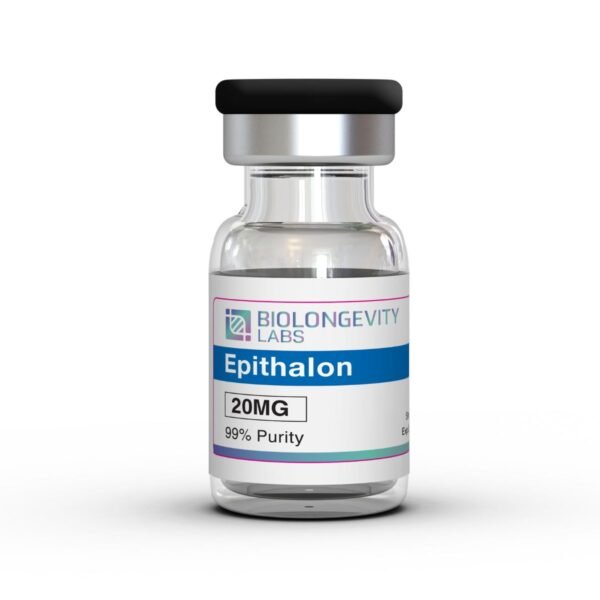
BioLongevity Labs
Epithalon (20mg)
Klotho sits in BioLongevity's longevity and cellular ageing category with Epithalon and FOXO4-DRI. Epithalon is a four-amino-acid peptide with a long, mostly Russian research record; our Epithalon guide goes through it. MOTS-c, a mitochondrial peptide, sits in the metabolic group, and our MOTS-c research summary covers its animal and early human data.
None of these has the human evidence that would justify calling it an anti-ageing treatment. If you're mapping out a broader plan for next year, our 2027 longevity setup puts research peptides alongside tracking and light therapy, with the evidence limits for each.
Buying from BioLongevity
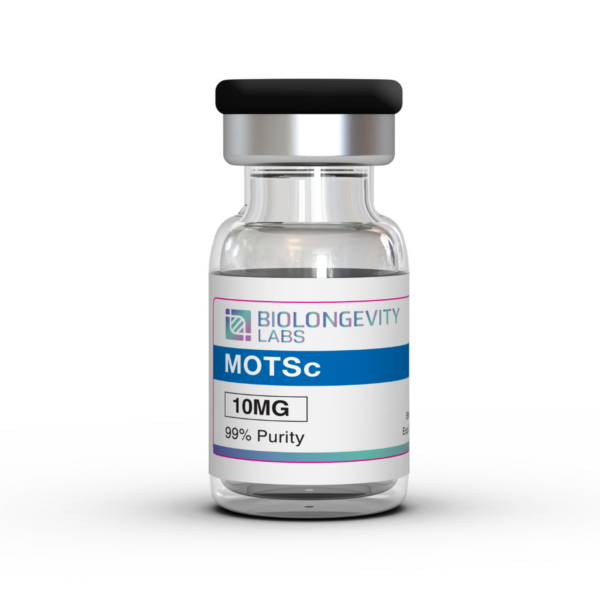
BioLongevity Labs
MOTS-c (10mg)
There's no sitewide sale on 18 November 2026. The standing code ATLAS15 takes 15% off, which would bring one pair of klotho vials to $254.15 if it applies to Signature products; check the cart line before paying. Our BioLongevity Labs discount code page keeps the current offers. Free shipping starts at $400.
For how the brand stacks up, read our BioLongevity Labs review and our ranking of the best peptide companies. Everything it sells, klotho included, is labelled for in vitro research only, not for human or animal use.