
Why swallowing a peptide usually fails
A peptide is a short chain of amino acids, which is also what dietary protein becomes on its way to being absorbed. Your digestive system is built to take these chains apart. Pepsin starts in the acid of the stomach; trypsin, chymotrypsin and other proteases finish the job in the small intestine.
Anything that survives digestion then has to cross the gut wall, which keeps out large, charged, water-loving molecules. Most peptides are all three. And what does get through goes first to the liver, which breaks down a share of it before it reaches the rest of the body. That's the first-pass effect.
Daniel Drucker's 2020 review of oral peptide therapeutics in Nature Reviews Drug Discovery sets out why peptide drugs have nearly always needed an injection, and how few oral formulations have made it to market. The short version: getting a peptide into the blood by mouth is one of the harder problems in drug delivery.
Oral semaglutide shows how hard it is
The best real-world example is Rybelsus, the tablet form of semaglutide. Novo Nordisk co-formulated it with an absorption enhancer called SNAC (salcaprozate sodium). A 2018 study in Science Translational Medicine found that absorption happens in the stomach, close to the tablet surface, and only works with SNAC present, which buffers the local acid and briefly helps the peptide cross the stomach lining.
Even then, the US prescribing information (revised January 2026) puts estimated absolute bioavailability at about 0.4% to 1% for the 3, 7 and 14 mg tablets. The label tells patients to take it on an empty stomach in the morning with no more than 4 ounces of water, and to wait at least 30 minutes before eating, drinking or taking other pills.
Compare that with the injectable version, which uses doses of 0.25 to 2 mg once a week. The tablet needs a daily dose many times larger to reach a similar effect, because more than 99% of what you swallow never arrives. That's a major drug programme with a purpose-built enhancer, and it still loses nearly everything.
Keep that number in mind when a capsule of an ordinary research peptide, with no enhancer and no published absorption data, is sold as an alternative to a vial.
Why BPC-157 is the unusual case
BioLongevity Labs
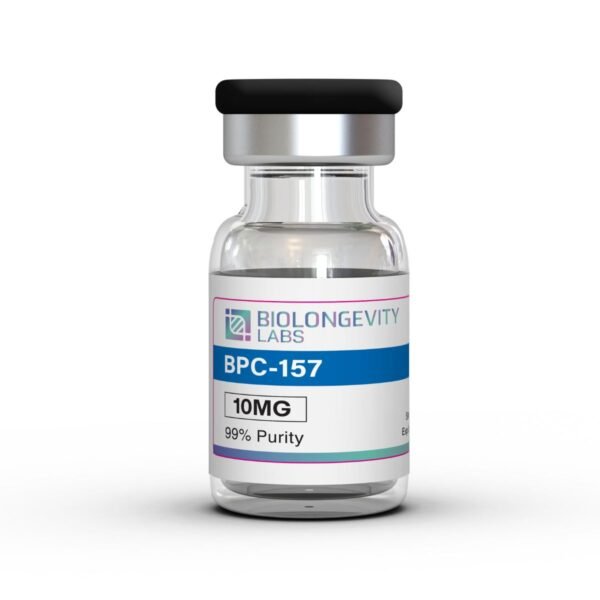
BPC-157 (10mg)
BPC-157 is a 15-amino-acid fragment of a protein found in human gastric juice. The Zagreb group that has published most of its research describes it as stable in that environment. Their 2024 review in Pharmaceuticals says it isn't destroyed in human gastric juice for more than 24 hours, citing their own earlier work. We couldn't find an independent lab that has repeated the measurement.
The same group has reported effects in rats when BPC-157 is given in drinking water or by stomach tube, as well as by injection. That's the root of the oral BPC-157 market. Our BPC-157 evidence guide covers what those animal studies do and don't show.
Stability in gastric juice is a different question from absorption into the blood. A 2022 pharmacokinetic study in rats and dogs measured intramuscular bioavailability at about 14% to 19% in rats and 45% to 51% in dogs, with a plasma half-life under 30 minutes. It didn't measure oral bioavailability.
A 2026 review in Pharmaceutics notes the peptide's unusual gastric stability but concludes its human pharmacokinetics remain critically undercharacterised, with no validated formulation and no completed phase II trial.
BioLongevity's BPC-157 (10mg) vial was $99.97 when we checked on 18 November 2026, or $84.97 with ATLAS15.
What human data exists for oral BPC-157
Very little. A 2025 systematic review in HSS Journal screened the literature from 1993 to 2024 for orthopaedic uses and found 36 studies, of which 35 were preclinical. The single human report involved knee injections.
The one oral trial we could find is NCT02637284 on ClinicalTrials.gov: a phase I safety and pharmacokinetics study of PCO-02 tablets, each containing 1 mg of BPC-157, in healthy volunteers at Hospital Ángeles Tijuana, sponsored by PharmaCotherapia. It planned to enrol 42 people from October 2015. Its status is listed as unknown, last verified in October 2015, and no results have been posted.
So the honest summary: oral BPC-157 has a plausible mechanism, rat data and one unfinished human trial. Nobody can tell you from published data how much of a capsule reaches human blood. For what's known about research protocols by any route, see our BPC-157 dosage guide.
BPC-157 and TB-500 capsules
People searching for BPC-157 and TB-500 capsules usually want an oral version of the popular blend. The oral case for TB-500 is much weaker than for BPC-157. TB-500 is either full-length thymosin beta-4 (43 amino acids) or a short fragment, and we found no published study showing either survives digestion or works by mouth.
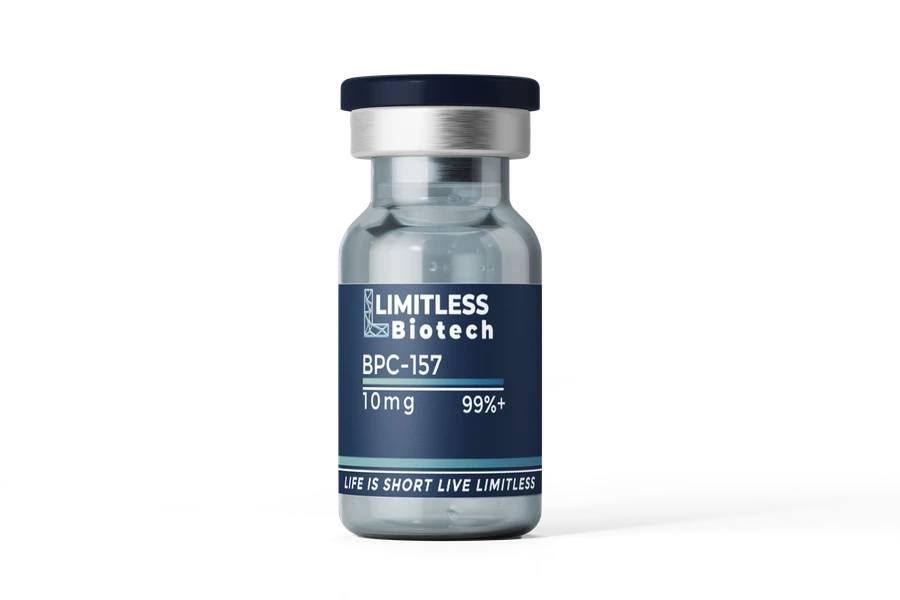
It also matters which TB-500 you're buying. BioLongevity's BPC-157 + TB-500 blend vial (5mg plus 5mg, $119.97 on 18 November 2026) uses the fragment Ac-LKKTETQ, while Limitless sells full-length thymosin beta-4. Our BPC-157 and TB-500 blend guide explains why the difference matters.
BioLongevity Labs' research store doesn't list capsules or tablets; we checked the shop on 18 November 2026. Its sister supplement line does sell capsules, including BioGutPro, which contains BPC-157 alongside larazotide. We'd skip it, for reasons set out in our BioLongevity Supplements review.
What's actually on sale: vials, capsules and sprays
Limitless Biotech
BPC-157 Nasal Spray
Limitless Biotech lists BPC-157 in three forms. Alongside the lyophilised vials there's a BPC-157 capsule (250 mcg per capsule, 60 capsules, described as the arginate salt) and a BPC-157 spray kit. Both of the newer formats were marked out of stock when we checked on 18 November 2026, and prices stay hidden until your research account is approved.
Read the paperwork closely. The vial page lists eight lots, each with purity, sterility and endotoxin certificates. The capsule page mentions published certificates but shows no lot numbers. The spray page says it may reference documentation for the underlying BPC-157 material rather than a spray-specific COA, and labels the product for in vitro research only.
Our upcoming look at Limitless Biotech's nasal sprays covers Semax, DSIP and the BPC-157 spray in detail.
If you do apply for a Limitless account, Jiffy15 takes 15% off through Limitless's store.
| Route | Human absorption data | Animal data | Typical COA coverage |
|---|---|---|---|
| Injection (vial) | Two-person IV safety pilot; no injected PK in humans beyond that | Extensive, mostly one research group | Purity, identity and often endotoxin per batch |
| Oral capsule or tablet | None published; one phase I trial never reported | Rat studies by drinking water and gavage | Often references the raw powder, not the finished capsule |
| Nasal spray | None published for BPC-157 | Very limited | Limitless says it may reference the underlying material |
BPC-157 by route: what the evidence and paperwork look like (checked 18 November 2026)
Injection is the default route in research
Most of the BPC-157 literature uses injected peptide, and so does the small human safety work: a 2025 two-person pilot gave intravenous infusions to healthy adults and reported no changes in the biomarkers it measured. Two people can't establish safety, but it's still more human pharmacology than exists for capsules.
Injected research peptides carry their own risks, from contamination to sterile technique, which is why endotoxin and sterility testing matter so much more for vials. Our peptide injections guide covers what research protocols involve and what goes wrong.
How to think about peptide pills
Start from the default assumption that a peptide taken by mouth doesn't reach the blood in any useful amount. Oral semaglutide shows that it can be overcome, with a specific enhancer, a specific molecule and years of formulation work. A generic capsule has none of that.
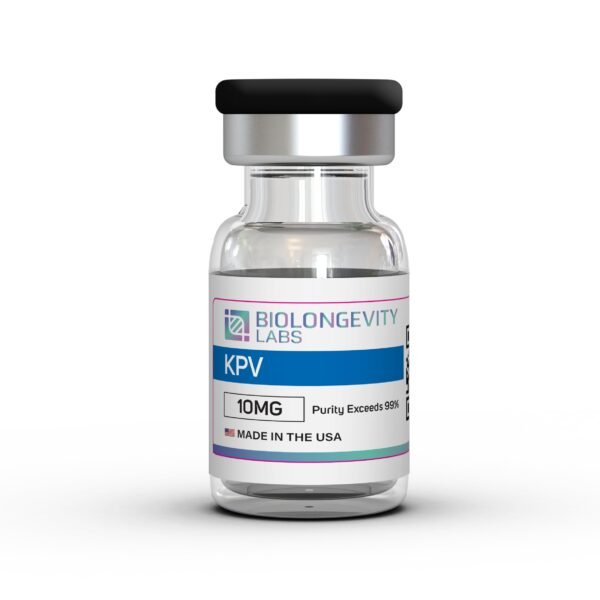
BPC-157 has a genuine reason to be the exception: it comes from gastric juice, and animal work suggests it acts in and from the gut. That's a hypothesis worth testing, and so far no one has published the human test. The same logic applies to KPV, another gut-focused peptide sold in both forms, which our forthcoming KPV oral vs injectable post looks at.
If you're buying for lab research, a vial with a batch-matched COA gives you known material. At BioLongevity, ATLAS15 takes 15% off, explained on the BioLongevity Labs discount code page, and our BioLongevity Labs review covers its testing. Everything here concerns research-use-only compounds. We don't give personal dosing advice.