
Why this page cannot tell you probabilities
Stating the limitation first, because it changes how you should read everything below.
In a clinical trial, adverse events are collected systematically from everyone enrolled, including the people who had none. That is what produces a sentence like affects roughly 3% of patients.
Nothing like that exists for research peptides. What exists is self-reporting, from people who chose to buy a compound, usually posted when something happened rather than when nothing did. That tells you what kinds of thing get reported. It cannot tell you how often.
So treat the lists below as a map of what to watch for, not as a risk calculation.
What gets reported across every compound
These come up regardless of which peptide is involved, which is a clue about the cause.
- Injection-site reactions. Redness, soreness, small lumps, occasional bruising. The most reported thing in the entire category.
- Fatigue or lethargy, usually in the first days.
- Headache.
- Flushing shortly after injection.
Most of that first one is technique
Worth separating out, because it is the most reported effect and the most fixable.
Lumps at a site almost always trace to repeat injection in one spot without rotating. Stinging usually means injecting through alcohol that has not dried, or cold solution straight from the fridge. Painful entry usually means a reused needle, which dulls after one use.
Our injection technique page goes through the sites and the sterility steps. Spreading redness and warmth is the exception to all of this and belongs with a clinician rather than a forum.
By compound
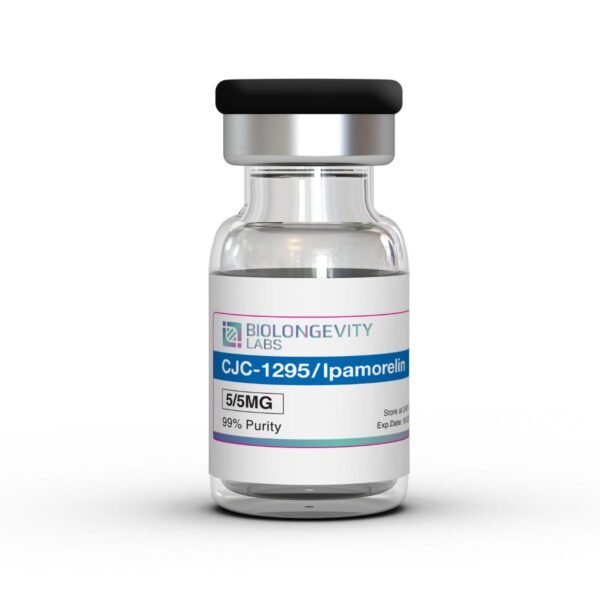
BioLongevity Labs
CJC-1295 & Ipamorelin Blend (10mg)
Where reports cluster, and what mechanism would predict.
Reported effects by compound, not incidence rates
The growth hormone group deserves a note
The GHRH analogues and GHRPs have the most recognisable side-effect pattern in this catalogue, and it is recognisable because it matches the known effects of growth hormone itself.
Water retention, carpal-tunnel-like tingling in the hands and joint aching are all documented with GH administration. Their appearance in reports on secretagogues is the clearest evidence in this whole field that these compounds do what they say mechanistically.
It is also a reminder that the same mechanism driving the hoped-for effect drives the unwanted one. Our peptides for muscle growth page covers why the hoped-for effect is weaker than advertised.
The one nobody puts on these lists
Every list above is about pharmacology. The risk with an actual measurable answer is what is in the vial.
Endotoxin is the one that matters most and is tested least. Bacterial endotoxin in an injected product causes fever and systemic inflammatory response, and it is the test most often absent from a certificate. Purity tells you how much is the stated compound; it says nothing about endotoxin.
That risk is not a property of the molecule. It is a property of the seller, which is why our vendor vetting guide grades documentation rather than branding, and why Limitless Biotech publishing separate purity, sterility and endotoxin files per lot is a genuine point in its favour even though it names no lab.
Where this leaves it
There is a reasonable list of things people report, a clear subset that is technique rather than compound, one group with a mechanistically coherent profile, and no probability attached to any of it.
Our are peptides safe page covers the broader picture, including how thin the human evidence is in the first place. Everything referenced here is sold for research use, and nothing on this page is medical advice. Anything spreading, febrile or systemic is a clinician's question, immediately.